For a typical Canadian home, water softener system cost ranges from about C$1,200 to C$3,500 for a professionally installed salt-based unit. Straightforward replacements can stay near the lower end of that range. Large-capacity equipment, difficult plumbing, iron filtration, or reverse osmosis can push the total beyond C$5,500.
These figures are useful planning ranges rather than firm quotes. Capacity, plumbing requirements, installation conditions, and added treatment can all change the final price.
| Budget item | Typical 2026 cost | What the figure means |
| Standard salt-based system, installed | C$1,200–C$3,500 | Typical Canadian replacement range |
| Higher-capacity or complex setup | C$5,500+ | Dual tanks, added plumbing, or other complications can raise the total |
| Current 40,000-grain retail example | About C$1,049 | Equipment only |
| Straightforward replacement labour | C$300–C$600 | Assumes accessible plumbing, a drain, and bypass connections |
| Annual salt | About C$80–C$200 | Typical recurring salt expense for a Canadian household |
| Rental example | C$29.99–C$47.99 per month | Monthly pricing varies by provider, terms, and included services |
Key Takeaways
- C$1,200 to C$3,500 is a useful starting budget for a standard, professionally installed salt-based system in Canada.
- Capacity should reflect both household water use and measured water hardness.
- Plumbing changes can add hundreds of dollars to an otherwise simple installation.
- Adding iron filtration or reverse osmosis can move a project into the C$4,000 to C$7,000 range.
- Compare the total five- or ten-year cost when deciding whether to buy or rent.
What Drives Water Softener System Cost?
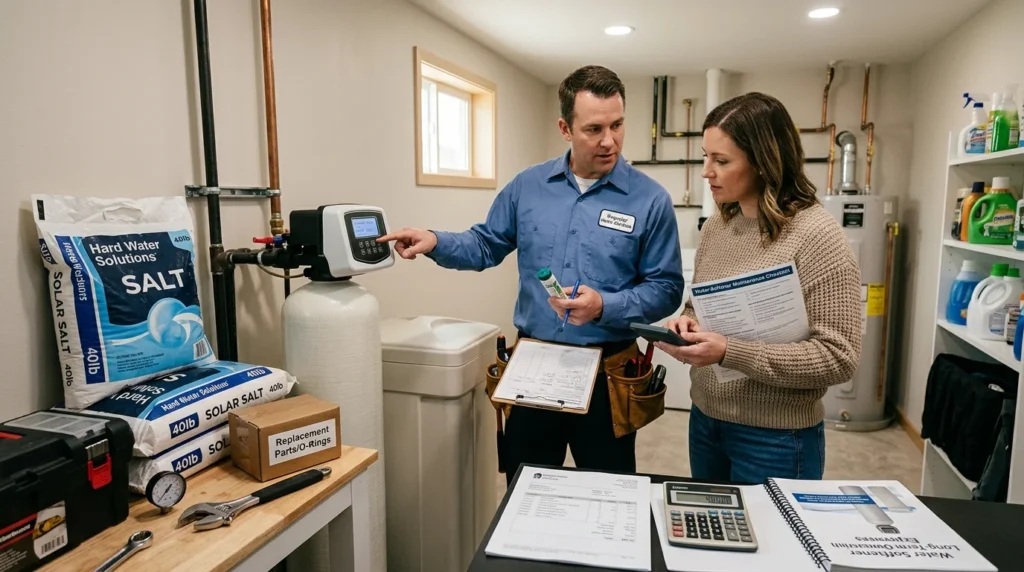
The unit itself is only part of the total expense. Four factors usually explain why two homeowners can receive very different estimates.
Water Hardness and Household Demand
Water hardness is mainly due to calcium and magnesium. In Canada, hardness is commonly measured in milligrams per litre as calcium carbonate.
A larger household also puts more water through the system, which makes capacity important. Buying a larger unit than you need increases the upfront cost, while choosing one that is too small can lead to more frequent regeneration.
Current Canadian retail pricing also shows how prices can rise as capacity increases. Comparable models may cost more as their grain capacity increases.
The Treatment Method
Ion-exchange softeners reduce calcium and magnesium hardness. These systems use cation-exchange resin and regenerate it with sodium or potassium chloride.
Be careful when comparing them with products marketed as salt-free conditioners or electronic scale-control devices. Ask what each product is designed to reduce and whether it actually removes hardness or only helps control scale.
That distinction matters because products designed to solve different problems should not be compared based on price alone.
Your Existing Plumbing
A replacement in a basement that already has a bypass valve and a suitable drain is usually simpler and less expensive. A straightforward replacement may cost about C$300 to C$600 in labour.
Missing drain connections, bypass components, or suitable plumbing can increase the installation cost. Pipe material also matters because working with copper may require different labour and fittings than working with PEX.
Ask an installer to inspect the installation area before accepting a firm price. Photos alone may not reveal every plumbing connection that needs to be modified.
Filtration Add-Ons
Hardness may not be the only water problem in a home with a private well. Iron, sediment, odour, or other water-quality concerns may require separate treatment.
A professionally installed salt-based system may cost about C$1,500 to C$3,500. Combined systems that include iron filtration or reverse osmosis can cost around C$4,000 to C$7,000 or more.
Reverse osmosis is not automatically necessary. If hardness is your only concern, adding an RO system may increase the cost without addressing a problem identified by your water test.
What Should You Budget Beyond the Purchase Price?
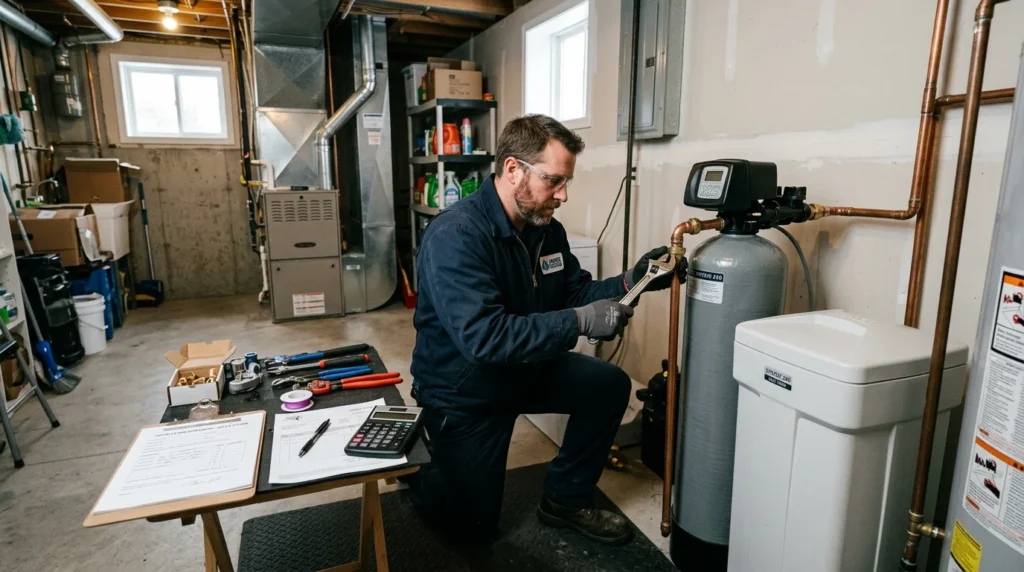
A good quote should clearly show all additional costs before work begins.
Look for separate line items covering:
- Equipment and stated grain capacity
- Installation labour
- Bypass valve and plumbing fittings
- Drain connection
- Electrical work, if required
- Removal of the old unit
- Water testing
- Additional filtration
- Warranty coverage
- Applicable sales tax
Remember that advertised system prices may exclude applicable taxes. That difference matters when comparing an online price estimate with a contractor’s final invoice.
A Simple Five-Year Ownership Example
Suppose an installed system costs C$2,200 before tax. If salt costs an average of C$150 per year, five years of salt would add C$750.
Your five-year planning total would be about C$2,950 before tax, repairs, financing costs, or optional servicing.
This example is not a quote. It simply shows how recurring expenses can affect the total cost of ownership.
Buying vs. Renting: Compare the Long-Term Total
Renting lowers the upfront cost, but you should convert the monthly payment into a long-term total before deciding. Rental prices may range from about C$29.99 to C$47.99 per month, depending on the provider and the equipment included.
At those rates, ten years of payments would total about C$3,599 to C$5,759 before any future price increases. That calculation does not mean renting is automatically more expensive.
Rental plans may include repairs, parts, and labour that an owner might otherwise have to pay for separately. Compare exactly what each agreement includes before making your decision.
Buying may suit a homeowner who wants ownership and expects to stay in the property for several years. Renting may suit someone who prefers a lower upfront cost and included service.
What Does Maintenance Add Each Year?
Salt is the clearest recurring expense for conventional equipment. A typical Canadian household may spend about C$80 to C$200 per year, depending on water use and regeneration frequency.
Service costs vary more widely. Warranty terms, replacement filters, resin condition, water chemistry, and local labour rates can all affect the amount you pay.
Ask about maintenance requirements before choosing a model. A lower purchase price may be less attractive if proprietary parts or mandatory service plans are expensive.
Five Ways to Avoid Paying More Than Necessary

- Test your water first. Choose equipment based on measured hardness and household demand, not on the largest model a salesperson offers.
- Compare systems with similar capacities. A 30,000-grain quote should not be compared directly with a 60,000-grain quote as though the equipment were identical.
- Request itemized pricing. Separate equipment, labour, plumbing changes, disposal, filtration, taxes, and service plans.
- Question every add-on. Ask which water-test result shows that you need iron treatment, carbon filtration, or reverse osmosis.
- Compare total ownership costs. Put purchase and rental options on the same five- or ten-year timeline.
You may also want to discuss whether every tap in your home should receive softened water. Depending on your setup and preferences, an installer may recommend leaving a separate unsoftened supply for certain uses.
Get Three Quotes Before You Decide
Start with a water-hardness test. Then request at least three itemized quotes based on the same treatment goal and similar system capacity.
Ask each installer to specify the equipment size, valve type, installation work, warranty, annual consumables, and optional add-ons. This makes the quotes much easier to compare.
The goal is not simply to find the lowest sticker price. It is to pay for the equipment your water and household actually require without spending extra on unnecessary capacity or treatment.
Frequently Asked Questions
A practical 2026 planning range is about C$1,200 to C$3,500 for a standard, professionally installed salt-based system. Higher-capacity or more complicated installations can reach C$5,500 or more.
It may be high for basic softening equipment with no major installation work. A C$5,000 quote can be reasonable when it includes iron filtration, reverse osmosis, higher capacity, or difficult plumbing.
Ask for an itemized breakdown so you can see exactly what is included.
Not necessarily. Salt-free conditioners can cost as much as, or more than, some traditional salt-based systems.
More importantly, the two technologies may not provide the same type of treatment. Compare what each system actually does before comparing prices.
That depends on the measured hardness level and the problems it causes in your home.
Test your water first. Location alone is not enough to determine the right system because water conditions and household usage can vary considerably.
Not necessarily. A water softener addresses hardness, while reverse osmosis targets a different range of dissolved substances.
If hardness is your only concern, a softener may be sufficient.
It depends on the contract term, monthly rate, service coverage, and how long you expect to remain in the home.
Convert the monthly payment into a five- or ten-year total. Then compare that figure with the purchase price, maintenance expenses, and possible repair costs.