


A post hole digger can save hours when you are building a fence, deck, mailbox, or garden structure. Canadian soil changes the choice because clay, rock, roots, and frost can make simple holes difficult. The right tool depends on hole count, soil, diameter, depth, access, and your budget.
HomeCraftly prepared this guide for Canadian homeowners planning residential post and footing work. We checked prices against Canadian retailer listings in September 2026. We verified safety guidance against the Canada Energy Regulator.
Quick answer: For most Canadian homeowners, a manual clamshell digger suits a few holes in workable soil. Cordless earth augers make repeated fence holes faster and easier. Gas or towable augers suit larger jobs, dense clay, and deeper drilling. Rent powered equipment for occasional projects or when access is tight.
| Post Hole Digger | Practical Canadian guidance |
|---|---|
| Best for 1–4 holes | Manual clamshell digger |
| Best for repeated fence holes | Cordless earth auger |
| Best for heavy work | Gas or towable hydraulic auger |
| Common fence auger sizes | 6, 8, and 10 inches |
| Manual retail range | About CA$65–100 |
| Cordless retail range | About CA$228–748 |
| Utility-locate step | Contact your provincial one-call service before digging |
Key takeaways
- Manual clamshell tools are inexpensive and dependable for small jobs in workable soil.
- Cordless augers suit homeowners who expect several holes and want less physical effort.
- Gas and hydraulic equipment make more sense for larger projects or stubborn ground.
- Choose an auger diameter that fits the post, the concrete clearance, and local construction requirements.
- Locate buried utilities before digging, even on familiar residential property.
Post Hole Digger Types Compared for Canadian Projects
Canadian stores sell four practical categories for residential digging work. Each category trades cost, effort, speed, and control differently. Your project size should decide the category before the brand or battery platform does.
| Type | Best use | Main advantage | Main drawback | 2026 Canadian cost signal |
|---|---|---|---|---|
| Manual clamshell | A few fence or sign holes | Low cost and precise control | Slow in clay or rocky soil | About CA$65–100 |
| Cordless earth auger | Repeated residential holes | Quiet, portable, lower maintenance | Battery limits and kickback risk | About CA$228–748 |
| Gas earth auger | Larger or tougher jobs | Strong continuous digging power | Noise, fuel, weight, maintenance | Around CA$1,100 for some models |
| Towable or two-person auger | Deep or numerous holes | High output with less operator strain | Rental logistics and access needs | Rental pricing varies by location. |
Manual clamshell diggers
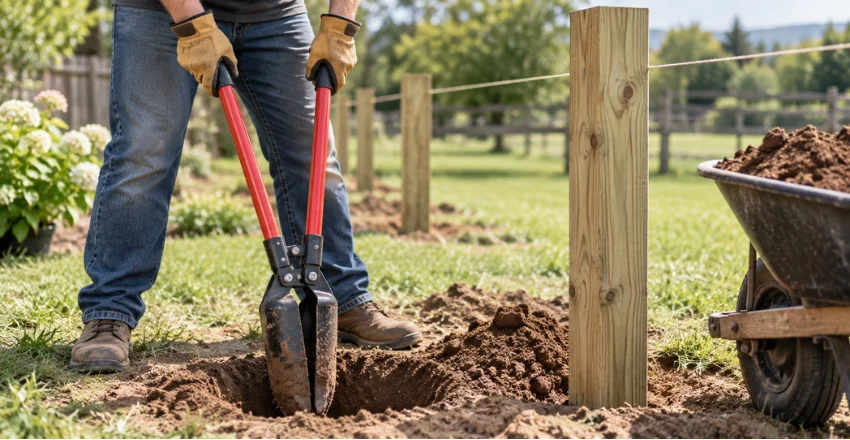
A manual clamshell model works well when you need only several holes. It removes loose soil cleanly and gives good control near fences or landscaping. It becomes tiring quickly in dense clay, gravel, roots, or deep excavations.
Current Canadian listings support this low-cost position. RONA shows several manual models around CA$65 to CA$85. Home Depot Canada lists options near CA$73 to CA$99. Prices can vary by store, promotion, and availability.
Cordless earth augers
Cordless augers are a strong middle ground for many homeowners. They start instantly, avoid fuel mixing, and suit repeated fence or planting holes. Modern brushless models also offer useful control when the bit meets changing soil.
Home Depot Canada’s cordless auger listings currently range from about CA$228 to CA$748. Included batteries, charger packages, voltage, and bit diameter explain much of that spread. A tool-only model makes more sense when you already own compatible batteries.
Gas-powered augers
Gas machines suit jobs where runtime and digging force matter more than quiet operation. They can handle larger bits and longer sessions without waiting for batteries. Their extra weight and torque also demand more careful handling.
Home Depot Canada lists an ECHO 42.7 cc gas earth auger around CA$1,109. Other gas models and used equipment can cost less, so one price shouldn’t define the category. Compare engine size, gearbox design, bit compatibility, service access, and total weight.
Towable and two-person augers
Rental equipment makes sense for large but occasional jobs. Home Depot Canada’s lawn and garden rentals include one-person, two-person, and towable hydraulic augers. Local stores show pricing and availability based on location and rental period.
This route can beat buying a large machine for one fence or deck project. It also keeps storage, engine maintenance, and long-term ownership costs off your list. Measure gate width and site access before reserving larger rental equipment.
How Much Should You Spend in Canada?
Start with the number of holes, then compare ownership against rental. A CA$75 manual tool is easy to justify for occasional household work. A CA$500 cordless setup makes more sense when you already have repeated projects planned. The battery platform can quickly change the calculation.
Existing batteries may reduce a cordless purchase by hundreds of dollars compared with a complete kit. Buying a second platform creates future charger, battery, and storage costs. Before shopping, measure your planned layout with a reliable tape, and our measuring tape guide explains which types hold up outdoors. Mark every hole and count them before deciding which power level you need.
This simple step often prevents buying more machines than the job requires.
Match the Tool to Soil, Hole Count, and Access
Loose loam and sandy soil work well with manual tools and smaller cordless augers. Dense clay increases resistance and packs around blades or flights. Rocky soil can stop an auger suddenly, so slower work and hand clearing may be safer. For one to four holes, manual digging is often reasonable.
Several repeated holes favor cordless equipment, especially in accessible yards. Long fence runs usually justify renting heavier equipment or hiring an operator. Access matters as much as digging power. Narrow gates, slopes, mature landscaping, and tight side yards can exclude towable or machine-mounted equipment. A smaller cordless auger may finish slower but reach places larger equipment cannot.
Choose the Right Auger Diameter and Hole Depth
Bit diameter should leave enough room for the post and any required backfill or concrete. An 8-inch bit is common around standard 4×4 fence posts. Larger 6×6 posts and structural footings usually need wider holes.
| Project | Common starting diameter | Important check |
|---|---|---|
| Light posts or stakes | 4–6 inches | Confirm stability needs. |
| Typical 4×4 fence post | About 8 inches | Allow working room around post. |
| Larger 6×6 post | 10–12 inches | Confirm project and code requirements. |
| Deck or structural footing | Often 10–12+ inches | Follow approved plans and local code. |
Depth is more complicated because frost conditions vary widely across Canada. Fence requirements also differ from deck footing requirements. Check your local building rules, approved plans, and site conditions before drilling structural holes.
A deep hole also creates more spoil and backfill work. Compacting backfill in controlled layers helps reduce later settlement around posts. HomeCraftly’s tamper guide explains suitable tools for tight post-hole and trench work.
Locate Utilities Before You Dig
Buried infrastructure is a safety check you can’t skip. The Canada Energy Regulator advises contacting Click Before You Dig or a regional one-call center. Federal pipeline rules may require consent to dig 30 cm or deeper in prescribed areas.
Private services may not always appear on public utility records. Irrigation lines, private electrical feeds, lighting cables, and outbuilding services can still cross a yard. Review property information and follow local locate instructions before any auger enters the soil.
Powered augers can twist suddenly when a bit catches rock or roots. Keep stable footing, follow the manufacturer’s operating instructions, and stop before clearing a jam. Never place hands near a moving bit or rotating drive components.
What to Check Before Buying
Check bit sizes before comparing motor specifications. A powerful machine can still fail the job if compatible bits cannot match your required hole diameter. Extensions also matter when your project needs deeper drilling. Next, compare total working weight, reverse function, anti-kickback controls, and handle layout.
These details affect control more directly than marketing power claims. Service access also matters if you’ll use the machine for several seasons. Finally, plan where the tool will live between projects. Long auger bits, handles, batteries, and accessories need dry, secure storage. HomeCraftly’s toolbox guide can help organize smaller accessories and related hand tools.
Rent or Buy: A Practical Verdict
Buy a manual model when you expect occasional small jobs and workable soil. Buy cordless when repeated residential projects justify the convenience, and you can use the battery platform elsewhere. Rent gas, two-person, or hydraulic equipment when one large project would otherwise leave expensive equipment unused.
For many Canadian homeowners, cordless offers the best balance of effort and ownership. Manual tools still win on price, simplicity, and precise cleanup around finished landscaping. Heavy rental equipment wins when hole count and soil conditions exceed comfortable homeowner-scale work.
The right decision is the least expensive option that completes the project safely. Do not buy extra power to compensate for uncertain hole size or layout. Confirm your dimensions, access, soil, and utility location before spending money.
Your Next Step
Mark the entire layout before choosing equipment. Confirm hole diameter, depth, access, soil, and utility locations before you rent or buy. Then choose the smallest tool category that can complete the work safely and efficiently.
Frequently Asked Questions
What size post hole digger is best for fence posts?
For many 4×4 fence posts, an 8-inch auger is a common starting point. Larger posts usually need a wider hole for working clearance and backfill. Always check your fence design, soil conditions, and local requirements before drilling.
Is a manual model worth buying?
Yes, when your project has only a few holes in manageable soil. Manual tools cost less, store easily, and require almost no maintenance. They become poor value when clay, rocks, depth, or hole count make the work exhausting.
Should I rent an auger instead of buying one?
Renting suits one-time fences, decks, or landscaping projects that need more power. Home Depot Canada offers several auger formats through participating rental locations. Compare local rental costs with the purchase price, transport, storage, and future use.
Can I drill post holes in frozen ground?
Frozen soil makes residential digging harder and less predictable. Powered equipment can also encounter buried ice, rock, and dense frozen layers. Postpone the work when conditions prevent safe drilling or proper installation.

