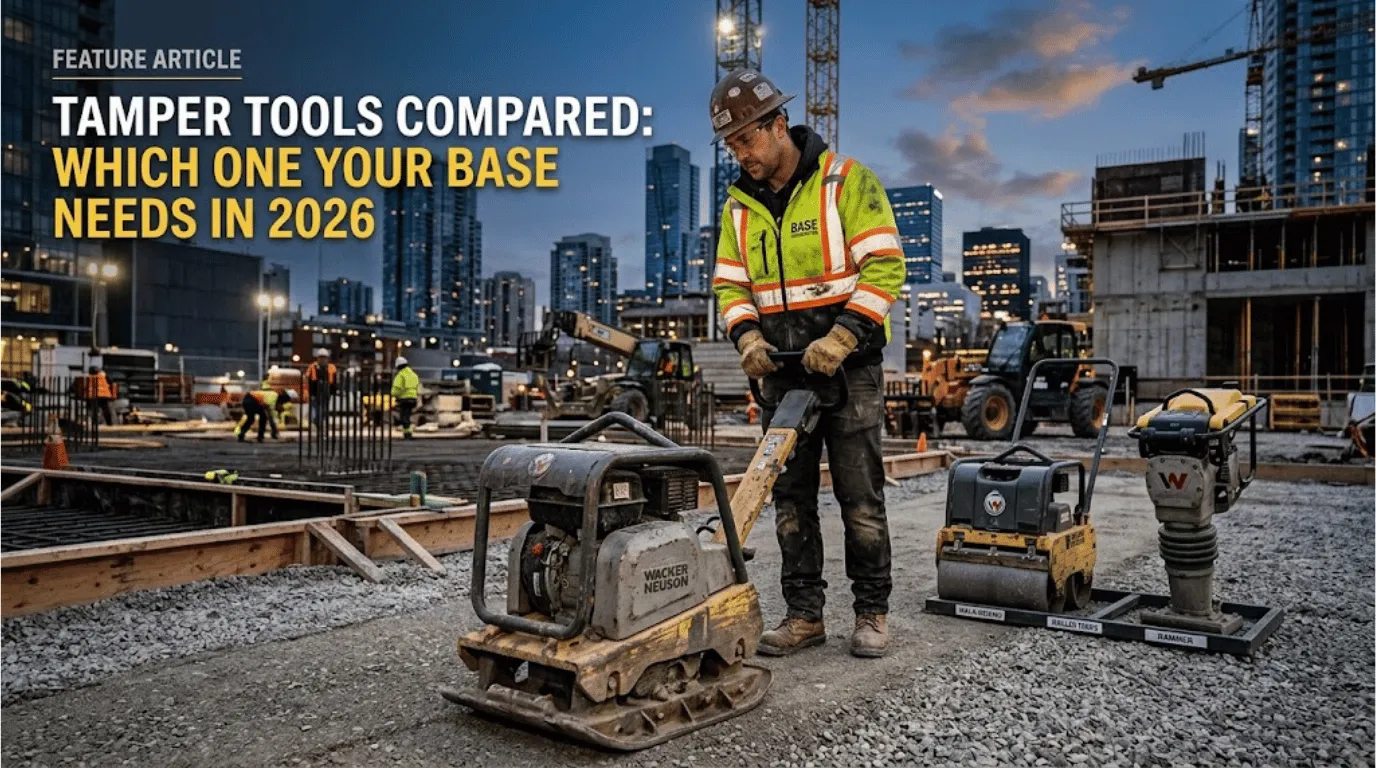
Compaction is the step most people skip, and it is why patios sink and fence posts start to lean by year three. A tamper is the tool that prevents it, whether that means a steel plate on a wooden handle or a vibrating machine you rent for a Saturday. Pick the wrong one, and you lose a weekend to a base that settles anyway.
The short answer: hand tampers suit small patches, trench bottoms, and layers up to roughly 50 mm. Plate compactors handle patios, walkways, and driveways in granular fill, in layers up to about 100 mm thick. Jumping jack rammers beat both of them on clay soil and in the deep, narrow holes around fence posts.
Key takeaways
- Thin layers beat brute force. Two 75 mm lifts compact properly; one 150 mm lift never does.
- Soil moisture decides the result. Damp compacts, dry bounces, saturated pumps.
- Granular gravel wants vibration. Clay and silt want impact.
- Buying a hand tool costs less than renting a machine twice.
- Frozen ground cannot be compacted, no matter which tool you own.
The three compaction tools at a glance
| Tool | Best for | Realistic lift depth | Rough coverage | Canadian cost |
|---|---|---|---|---|
| Hand tampers | Patches, trench bottoms, around posts, tight corners | Up to 50 mm | 2 to 4 m² an hour | CA$45 to CA$160 to buy |
| Plate compactors | Patios, walkways, driveways, granular base and bedding sand | 75 to 100 mm | 40 to 60 m² an hour | CA$70 to CA$110 a day to rent |
| Jumping jack rammers | Clay, silt, deep trench backfill, post holes | 200 to 300 mm | 15 to 25 m² an hour | CA$110 to CA$170 a day to rent |
Why compaction decides whether your base lasts
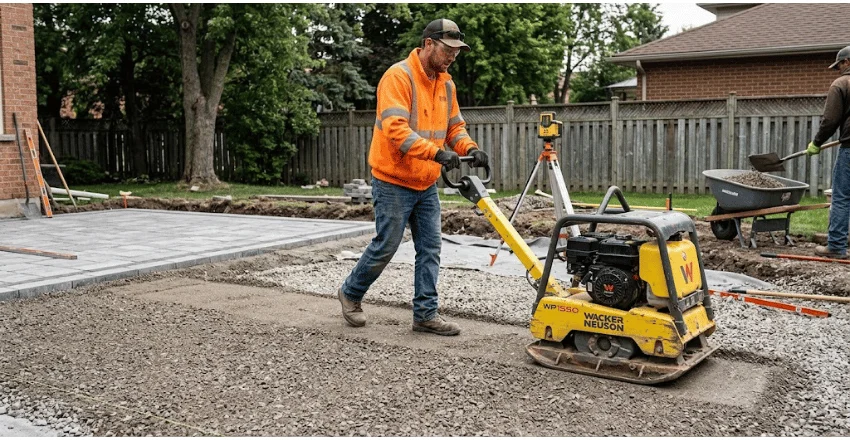
Freshly dumped gravel is roughly one-fifth air. Those voids close on their own eventually, under traffic, rain, and the freeze-thaw cycle every Canadian yard goes through. Closing them first, before the pavers go down, is the point. Our related guide, Screwdriver, goes further into this.
The difference shows up in the second and third winter. Bases built in thin, compacted layers move a few millimetres. One that was raked flat and walked on once can drop 20 mm to 30 mm. It never drops evenly either, which is how you get a wavy patio with a puddle in the middle.
Drainage rides along with density. Compacted fill sheds water sideways to the edge of the excavation, so less of it sits under the slab through winter, and loose fill does the opposite. Water that freezes lifts whatever is above it.
Density is drainage. Skip it, and you pay twice.
Hand Tamper vs Plate Compactor: Where the Line Really Sits
The two tools use different physics. A hand tamper is static: your arms and body weight drive a flat plate down, and the force stops the moment the plate lands. A plate compactor is dynamic, shaking the ground thousands of times a minute so particles shuffle past each other and lock together.
Vibration reaches deeper than muscle. That single fact settles most of the decision.
Hand tampers win when the area is small, awkward, or close to something you do not want shaken. Think a 1 m² repair, the bottom of a post hole, or the strip beside a foundation wall. Take the forged steel Garant sold through Home Depot Canada. It carries a 250-mm (10-inch) head on an ash handle just over 1 m long, and it weighs about 6.6 kg. There is nothing to start, nothing to fuel, and nothing to return by 5 p.m.
Plate compactors are best for areas larger than about 10 m². Renting one for a 30 m² patio turns a punishing day into a comfortable hour. They also seat pavers into bedding sand at the end of the job, which no hand tool does well.
Our rule of thumb is simple. Can you finish the whole area with the hand tool inside an hour? Buy it. Past that hour, rent the machine and spend the savings on better gravel.
Lifts, moisture and passes: the part everyone gets wrong
Most failed bases were compacted with the right tool and the wrong method. Method matters more than the machine. Three details carry most of the weight: how deep you dig, how thick you spread, and how damp the material is when you hit it.
- Excavate to a real depth. Walkways want 100 mm to 150 mm of granular base; driveways want 200 mm or more. Confirm that depth in several spots rather than eyeballing it, which is where picking a measuring tape you can read quickly saves real time.
- Spread thin lifts. Cap each layer at 100 mm with a plate compactor and 50 mm with a hand tool. Thick layers compact at the top and stay loose underneath- the worst of both worlds.
- Get the moisture right. The gravel should feel like a wrung sponge. Squeeze a handful. It should hold its shape and leave your palm damp, not dripping. Mist dry material with a hose, and wait out anything soaked.
- Make three to four passes. Overlap each by about a third, then run the last one across the first direction. A single pass compacts the surface and lies to you about the rest.
- Test it. Walk the finished lift with your heel down. Any print deeper than 3 mm means another pass.
The jumping jack rammer: for clay, silt and post holes
Clay and silt behave nothing like gravel. They are cohesive, so the particles stick to each other and vibration barely moves them. Impact does. Rammers lift the foot and slam it down, punching energy 200 mm to 300 mm into the ground. More from us: Peel-and-Stick Backsplash.
Rammers earn their fee on fence posts, deck footings, and trench backfill over a water line. Compacting that backfill in lifts stops the trench sinking into a trough next spring. Most weigh 60-80 kg, so bring a second person and a ramp.
What to check before you buy
Hand tampers look identical online. They are not. Four details separate a tool that lasts twenty years from one that fails in a season.
- Head size. The 200-mm (8-inch) head reaches into tight spots and concentrates force. Step up to 250 mm, and you cover ground faster, which suits most yards.
- Forged versus cast. Forged steel takes repeated impact against rock. Cast heads crack at a corner, usually on the day you need them.
- Weight. Between 4.5 kg and 7 kg is the useful band. Lighter feels great for five minutes and does nothing on gravel. Heavier wrecks your shoulders.
- Handle material. Ash absorbs shock and stays comfortable in cold weather. Steel tube is tougher, but it sends every impact into your wrists, and it is brutally cold in April.
Storage matters more than buyers expect, because this is a 1 m tool with a heavy end that falls on cars. Two wall hooks solve it, and if you are already planning to organize your garage this season, hang it beside the shovels while the wall is empty.
What it costs in Canada
Prices we have tracked at Canadian Tire, Home Hardware, RONA, and Home Depot Canada fall into three tiers. Basic 200-mm models with a steel handle run CA$45 to CA$70. Mid-range tools with a forged head cost between CA$80 and CA$110. Contractor-grade models reach CA$110 to CA$160.
Rental changes the math quickly. Plate compactors go for CA$70 to CA$110 per day at Home Depot Canada tool rental and independent yards, and rammers run CA$110 to CA$170 per day. Weekend rates often bundle Saturday and Sunday for about 1.5 days of charge, which is usually the better deal.
The break-even is worth doing before you decide. A CA$110 hand tamper costs less than two days of plate rental. Facing several small jobs over a few years, you are better off owning the machine and renting it for the one big pour. Buying a plate compactor outright starts at around CA$900 and climbs to over CA$2,500.
Frozen and saturated ground: two jobs to postpone
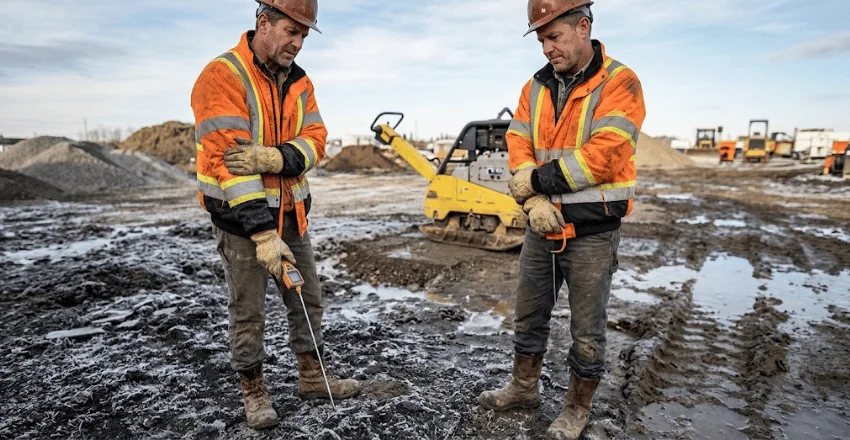
Frozen material cannot be compacted. Ice holds the particles apart; you get a surface that feels solid, and in April, the ice melts, leaving voids that collapse. Once ground temperatures sit below 0 °C, base work should wait. In most of the country, that means the window runs from roughly late April to late October.
Saturated ground fails the other way. Water carries the load instead of the soil, so the surface flexes and ripples ahead of the plate. Contractors call it pumping. See it and stop. Give the ground a day or two to drain, then come back.
Care that doubles the tool’s life
Wet clay dries onto a steel head like concrete, trapping moisture against the metal. Scrape it off with a putty knife while it is still soft. Wire brush, dry cloth, a wipe of light machine oil: two minutes. Do it every time.
Skip that for a season and orange pitting spreads across the plate face. It is fixable, and the usual approach to getting rust off metal tools works fine on a tamping head. Left alone, pitting eats into the striking face and ruins the flat surface you rely on.
Check the handle wedge every spring. Heads that work loose can spin on impact or fly off, and both outcomes hurt. Tap the wedge down, or replace the handle before the season starts.
The verdict

Our pick for the average Canadian homeowner is a 250-mm forged-steel hand tool priced at around CA$110. Rent a plate compactor for anything bigger than about 10 m². That pairing covers post holes, repairs, garden beds and a full patio, with no machine idling in the garage 51 weeks a year. Choose a rammer only for heavy clay or a deep trench.
Measure your area this weekend and calculate the square metres you are actually covering. Then price both routes at your local Home Depot Canada or Canadian Tire, before the first shovel goes in.
Frequently asked questions
Damp is ideal; wet is not. If your boot prints fill with water or the surface ripples ahead of the plate, the ground is saturated, and compaction will not hold. Wait a day or two after heavy rain.
Under about 10 m², a hand tool in 50 mm lifts does an honest job. Above that, hand compaction takes so long that most people quietly cut passes, which defeats the purpose.
Three to four per lift, each overlapping the last by a third, with the final one running across the earlier direction. Then run the heel test.
The 250-mm head is the better default for yard work, because it covers more ground per swing. Choose 200 mm if your work is mostly in trenches, around posts, or tight against walls.
Not before the pavers are laid. Screed the sand smooth, leave it loose, and set the pavers. Then run a plate compactor with a rubber pad over the finished surface, which seats them and drives jointing sand into the gaps.