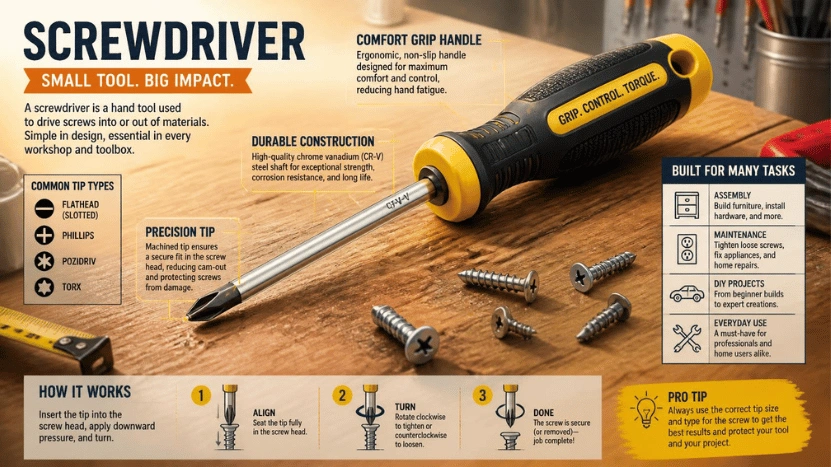
A reliable screwdriver starts with a correct match between its tip and the screw head. Inspect first. For most Canadian homes, a small set with Robertson, Phillips, slotted, and Torx options covers routine furniture, cabinet, fixture, and hardware jobs.
Three parts matter: the handle, shaft, and shaped tip. A good match stays seated while you turn. Poor fits slip. Size matters as much as the shape of the drive.
| Drive type | What it looks like | Common home use |
| Robertson | Square recess | Canadian cabinetry, framing, and deck hardware |
| Phillips | Cross-shaped recess | Furniture and imported household items |
| Slotted | Single straight slot | Older hardware and some switch plates |
| Torx | Six-point star | Appliances, tools, and higher-torque fasteners |
Key Takeaways
- Match both the shape and the size before you apply pressure.
- Keep a #2 Robertson driver close by for common Canadian fasteners.
- Choose a longer shaft for reach and a stubby handle for tight spaces.
- Stop when the tip comes out or the screw head begins to deform.
What a Driver Is Used For
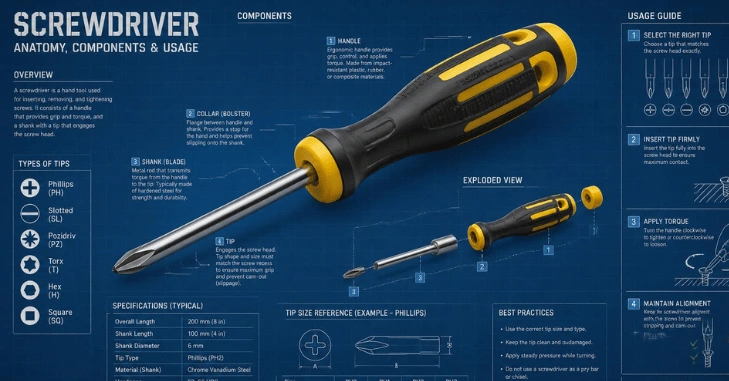
It turns screws. The tool is useful for cabinet hinges, drawer pulls, outlet covers, furniture hardware, and many small repairs. Its job is to turn a matched fastener, not to pry, chisel, or punch a hole.
Begin by cleaning dust from the screw recess. Seat the tip fully, keep the shaft in line with the screw, and apply steady inward pressure as you turn. Angles cause slips. Slow turns give you feedback before the problem worsens.
Choose the Right Screwdriver Type
Robertson, also called square drive, deserves priority in a Canadian starter set. A #2 size is the common everyday choice for many construction and cabinet screws. Start with #1 and #2 square drivers if you do regular household repairs. The square recess helps the tip stay engaged when the size is correct.
Phillips tips fit a cross-shaped recess. They are common on furniture, appliances, and imported hardware. They come in several sizes, so do not force a small tip into a larger cross. A Phillips tip that looks close but leaves visible space at the edges is not the right size.
Slotted tips fit a straight groove. They are simple, but the tool can slip sideways if the blade is too narrow. Torx tips feature a six-pointed star and are common on tools, hardware kits, and some appliances. Use the exact star size rather than a nearby one.
Furniture hardware often uses square-drive screws. If loose chairs are on your repair list, learn how to fix wobbly chair joints once you have the right driver in hand.
Match Shape and Size in Three Checks
- Identify the recess. “Square” means Robertson, “a cross” means Phillips, “a single slot” means slotted, and “a six-point star” means Torx.
- Test the fit without turning. The tip should sit deep and touch the walls of the recess. It should not wobble or leave large open corners.
- Turn with control. Keep the shaft straight, press inward, and stop if the tip jumps. Recheck the size before trying again.
Good lighting makes this test easier. Wipe paint or debris from the recess, then use your phone camera to inspect a stubborn fastener up close. That is quicker than guessing through a set of bits and risking a rounded head.
Pick Handle Shape and Shaft Length
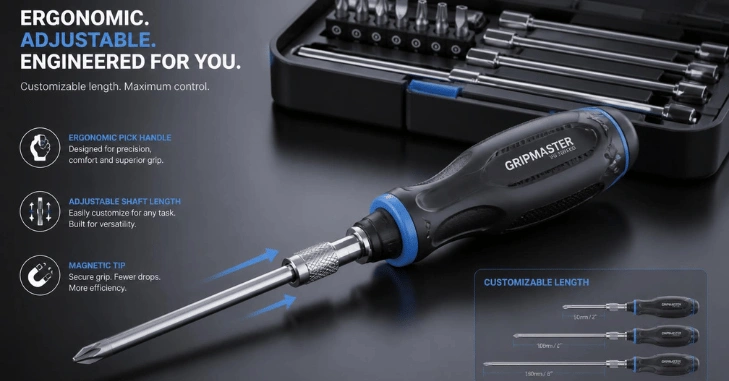
Full handles add leverage. A stubby version fits behind drawers, inside cabinets, and near walls. Long shafts reach recessed screws, but they need a straight path. Choose the shortest tool that can reach the fastener without forcing your wrist into an awkward angle.
Magnetic tips help. A ratcheting handle reduces the need for repeated wrist turns on longer jobs. Those features are convenient, but a plain fixed driver with a crisp tip remains useful. Buy quality in the sizes you reach for most.
Mark first. Before mounting hardware or shelves, use this guide to choose a measuring tape and mark locations accurately. Careful marking means fewer removed screws and cleaner finished surfaces.
A practical Canadian starter set
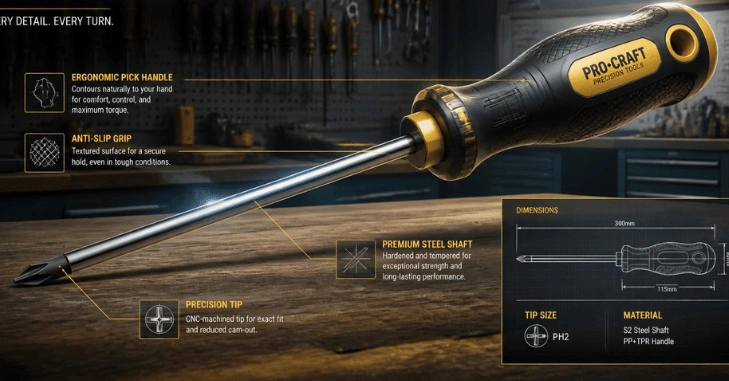
Build the first kit around a #1 and #2 Robertson, a small and medium Phillips, a medium slotted blade, and a compact Torx bit holder with a few common stars. Add a stubby square driver if you often work in cabinets. This small group handles far more household work than a large tray of rarely used specialty shapes.
Keep the tools in a pouch or divided drawer. Label loose bits and replace a tip when its corners look rounded. A worn driver cannot hold the recess well, even if its handle still feels comfortable. Clean, sharp tips help you notice a size mismatch early.
Know when to stop
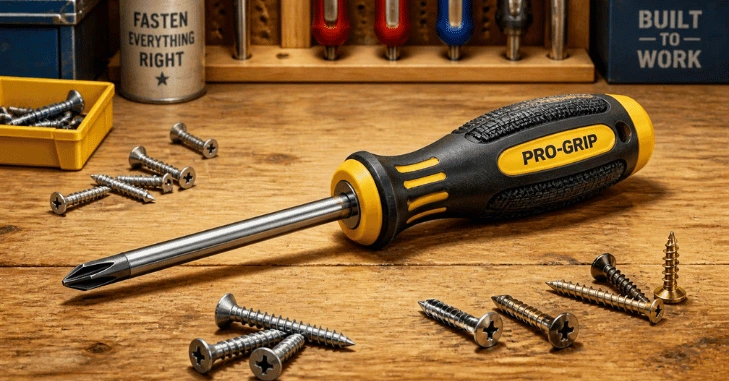
Stop turning if the tip repeatedly slips, the recess begins to round, or the screw will not move with steady pressure. Change to the correct size, clear debris, and check whether paint or corrosion is locking the threads. More force with a poor fit usually ruins the fastener before it can be freed.
Start again only after you can see why the first attempt failed. Try a fresh, correctly sized tip and maintain a straight line through the shaft. Clear-packed paint with a suitable pick instead of levering on the head. If the fastener remains stuck, leave it for a repair method designed for seized hardware. That choice protects the surrounding surface and preserves a better chance of removal later.
For equipment that involves wiring, switch off power at the appropriate breaker before opening a cover. Do not use a hand tool as a substitute for a tester. Our guide on using a multimeter for home checks explains its role as a reliable measuring tool.
Conclusion
A good screwdriver set does not need dozens of tools. The key is choosing the right drive type and size for the fastener, then using the tool with steady pressure and proper alignment. For most Canadian homes, starting with #1 and #2 Robertson, Phillips, slotted, and Torx drivers provides excellent coverage for furniture, cabinets, appliances, fixtures, and everyday repairs.
The biggest mistake is using a screwdriver that only looks similar to the screw head. A poor fit can slip, damage the fastener, or make a simple repair much harder. Keeping clean, sharp tips and knowing when to stop can save both time and hardware.
FAQs
Start with a #2 Robertson, then add #1 Robertson, Phillips, slotted, and Torx options. That group fits many common household fasteners without filling your drawer with duplicates.
The tip may be the wrong drive type, too small, worn, or not fully seated. Clean the recess, choose a fuller fit, align the shaft, and apply steady inward pressure.
No. The shaft and tip are made to turn a matched screw. Use a prying tool, then return to the correct-fit driver for the fastener.