Rust doesn’t always mean a metal item is ruined. If you’re wondering how to remove rust from metal, light surface corrosion on tools, furniture, hardware, and fixtures can often be treated at home. The key is choosing a rust-removal method that suits both the severity of the corrosion and the finish underneath. You might also like our piece on choosing a bathroom countertop. You might also like our piece on dishwasher picks for Canadian kitchens.
To remove rust from metal, clean away grease and dirt, then match the treatment to the surface and severity of the corrosion. Use baking soda for light spots, white vinegar or citric acid for small soakable steel parts, and a labelled rust remover or careful abrasion for heavier rust. Rinse the metal, dry it completely, and protect the bare surface afterward.
Rust Removal Methods at a Glance
| Method | Best for | Typical working time | Main caution |
| Baking soda paste | Light surface spots and stainless steel | About 30–60 minutes | Scrub gently on polished finishes |
| White vinegar | Small iron or steel items | 30 minutes to overnight | May affect paint, plating, or decorative finishes |
| Citric acid | Small steel tools and hardware | Several hours to overnight | Can strip some coatings and paint |
| Manual abrasion | Localized or flaky rust | Minutes to an hour | Coarse abrasives can scratch the base metal |
| Commercial remover | Moderate or heavy rust | Product-specific | Follow the label and surface restrictions |
| Rust converter | Large steel surfaces before painting | Product-specific | Converts rust rather than restoring a polished finish |
White vinegar, baking soda, acidic treatments, abrasives, and commercial removers are all commonly used to remove rust. The right choice depends on the item and its finish, rather than on a single universal “best” cleaner.
What You’ll Need
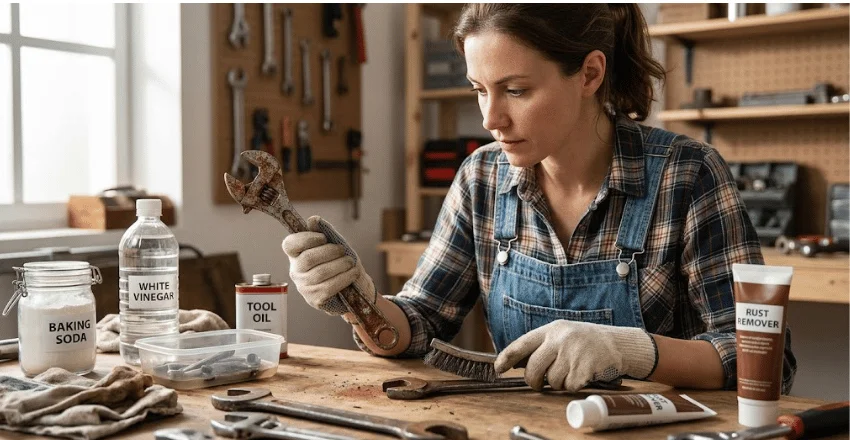
For most household projects, gather:
- Dish soap and clean water
- Nitrile or chemical-resistant gloves
- Eye protection
- Microfiber cloths
- An old toothbrush or soft-bristle brush
- A non-scratch scrub pad
- White vinegar or baking soda
- A plastic or glass soaking container
- Fine sandpaper or a suitable wire brush for unfinished steel
- A protective oil, wax, primer, paint, or corrosion inhibitor
If you’re using a commercial product, follow the instructions on its label rather than combining it with another cleaner.
Never mix an acidic rust cleaner, vinegar, or lemon-based solution with chlorine bleach. Combining acidic cleaners with bleach can release dangerous gases.
How to Remove Rust From Metal in 7 Steps
1. Identify the Metal and Its Finish
Look at what you’re cleaning before reaching for vinegar or sandpaper.
Bare iron and ordinary steel can usually tolerate stronger treatments than polished stainless steel. Painted, plated, blued, browned, antique, or decorative surfaces require more care.
Brass and copper also need different treatment. The reddish or green corrosion found on those metals is not the same as rust on iron or steel.
2. Wash Away Dirt and Grease
Clean the surface with mild dish soap and water. Grease can prevent a soaking solution or rust remover from making even contact with the affected area.
Dry the item so you can inspect the rust clearly before deciding which treatment to use.
3. Choose the Mildest Effective Treatment
Start with a method that matches the severity of the rust.
For a few small spots, try baking soda. For an unfinished steel tool with widespread surface corrosion, soaking may save considerable scrubbing.
Heavy, flaky rust may require a commercial product, sanding, or a combination of chemical and mechanical cleaning.
4. Give the Treatment Time to Work
Don’t assume that harder scrubbing always produces better results.
For vinegar, start with a short soak and inspect the metal regularly. Light rust may loosen within 30 minutes, while heavier deposits may require several hours.
Baking soda paste can usually sit on the affected area for 30 to 60 minutes before being scrubbed.
Commercial products vary considerably. Always follow the timing and application instructions provided on the product label.
5. Scrub Only as Hard as the Surface Allows
Once the rust has softened, use a toothbrush, a nylon brush, a non-scratch pad, or another suitable abrasive.
Bare steel can usually tolerate more aggressive cleaning. Decorative, plated, painted, and polished finishes cannot.
On stainless steel, avoid ordinary steel wool and carbon-steel brushes. These tools can scratch the surface and may leave behind particles that can contribute to further corrosion.
6. Rinse and Dry the Surface Completely
Remove the cleaner and loosened residue with clean water when the treatment method calls for rinsing.
Dry the metal immediately afterward. Pay close attention to joints, screw holes, seams, and moving parts where moisture can remain trapped.
For tools with hinges or mechanical parts, use a dry cloth and allow plenty of airflow to prevent moisture from remaining inside the assembly.
7. Protect the Cleaned Surface
Removing rust can expose fresh metal. Leaving that surface unprotected makes future corrosion more likely.
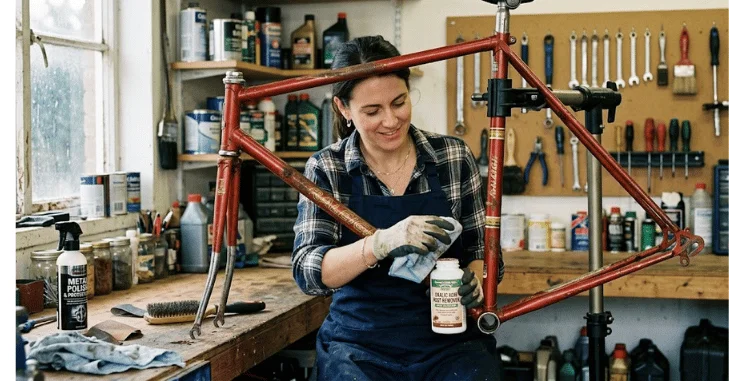
Depending on the item, protection may involve applying tool oil, wax, a corrosion inhibitor, metal primer, or paint.
For larger household projects, HomeCraftly’s home improvement section can help you plan related repairs and maintenance after the surface has been cleaned.
Which Homemade Rust Removal Method Should You Use?
Baking Soda for Light Rust Spots
Mix baking soda with enough water to form a spreadable paste. Apply it to the affected area, let it sit for about 30 to 60 minutes, and then scrub gently.
This method works well for light surface rust because it combines mild cleaning with gentle abrasion.
Baking soda is also a useful starting point for many stainless steel surfaces because it is less aggressive than coarse abrasives.
White Vinegar for Small Steel Parts
Place an unfinished iron or steel item in undiluted white vinegar. Check the item after about 30 minutes.
If rust remains, leave it in the solution longer and inspect it periodically rather than leaving it unattended for an extended period. Once the rust loosens, brush the surface, rinse it, and dry it completely.
Vinegar can work well on removable bolts, old hand tools, brackets, and similar items. It is less suitable for pieces with paint, plating, decorative oxide finishes, or unknown coatings.
Citric Acid for Soakable Items
Citric acid offers another option for soaking iron and steel. It can be useful for small tools, bolts, screws, and other hardware that can be fully submerged.
The main drawback is its potential effect on finishes. Citric acid may damage paint, coatings, or decorative surfaces.
Test a small area first if you are unsure how the item will react.
Abrasion for Rough, Unfinished Steel
Sandpaper, a wire brush, or another appropriate abrasive tool can quickly remove flaky rust from unfinished steel.
Begin with the least aggressive abrasive that works. Stop when you reach sound metal rather than grinding deeply into the surface.
Mechanical cleaning is often suitable for outdoor brackets, plain steel furniture frames, gates, and other surfaces that will be primed and painted afterward.
Be Extra Careful With Stainless Steel, Brass, and Finished Metal
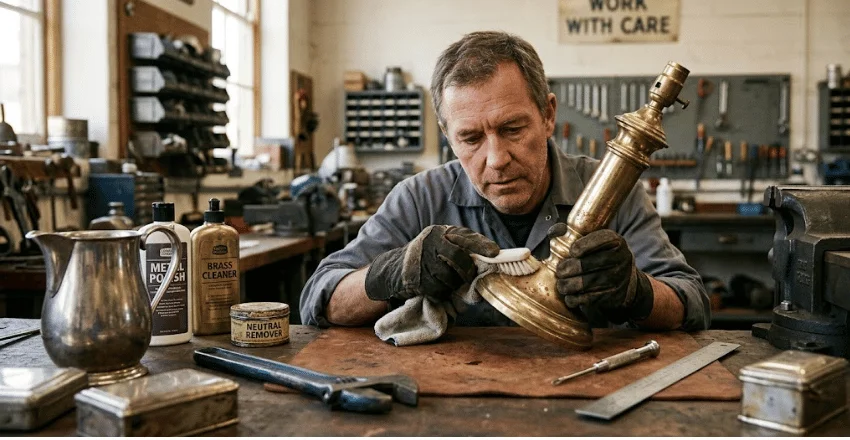
A rust-coloured mark doesn’t mean every metal object should be treated like a bare steel shovel.
Stainless steel usually requires gentler cleaning. Avoid harsh scratching, steel wool, and inappropriate chemical cleaners that may damage the finish.
Brass also requires a different approach. Acidic treatments can alter the appearance or composition of certain brass surfaces, especially when strong acids or salt mixtures are used.
Painted, plated, blued, browned, or decorative metal surfaces also need caution. Some rust removers can strip or discolour these finishes.
When the material or finish is uncertain, test the cleaning method on a small, hidden area first.
When Rust Means the Part Should Be Replaced
Surface cleaning cannot restore metal that has already been lost to corrosion.
A tool with cosmetic staining may still be worth saving. A structural bracket, railing connection, ladder component, vehicle part, or load-bearing fastener with deep pitting requires more caution.
Severe corrosion can weaken metal and reduce its ability to perform safely. If the part has holes, major flaking, cracks, severe thinning, or noticeable loss of strength, replacement or professional assessment may be safer than simply cleaning the visible surface.
How to Keep Rust From Coming Back
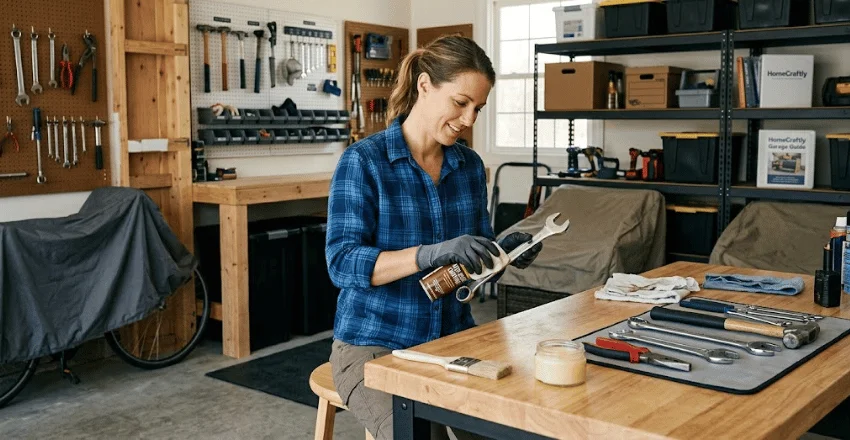
Controlling moisture is just as important as choosing the right cleaning method.
Dry tools before storing them. Repair damaged paint or protective coatings. Keep outdoor furniture covered when practical. Protect clean, bare steel with a suitable oil, wax, coating, or corrosion inhibitor.
Garage storage also matters. HomeCraftly’s garage organization guide can help you create designated storage areas for tools, hardware, and seasonal equipment, rather than leaving them on damp or dirty floors.
If you’re restoring old furniture that has rusty hardware and damaged wood, treat each material separately. Clean the metal first, then use HomeCraftly’s wood filler guide to choose an appropriate repair method for dents, cracks, or missing wood.
Start With a Small Test Area
Before soaking an entire tool or scrubbing a visible appliance, test the treatment on a small, hidden area. Make sure the cleaner removes the rust without dulling, stripping, staining, or scratching the finish.
Once you know the surface can tolerate the treatment, finish the job, dry the item thoroughly, and apply suitable protection. Then explore HomeCraftly’s home improvement guides for your next repair or maintenance project.
Frequently Asked Questions
For moderate or heavy rust, a purpose-made commercial remover may work faster than household soaking methods.
Some products begin working quickly, while others require several hours. Always follow the manufacturer’s material compatibility, safety, and timing instructions.
Yes. Undiluted white vinegar can help loosen rust on iron and steel.
Start by checking the item after about 30 minutes. Heavier rust may require several hours of soaking.
Avoid automatically using vinegar on painted, plated, brass, antique, or unknown finishes, as acidic solutions can affect some surfaces.
Yes. Baking soda can help remove light surface rust.
Mix it with water to create a paste, apply it to the affected area, let it sit, and scrub gently with a suitable brush or non-scratch pad.
It is best suited to mild rust rather than deep, flaky corrosion.
Start with about 30 minutes and inspect the item.
Moderate rust may require several hours, while heavier deposits may need an overnight soak.
Check the item periodically so the acidic solution does not remain on a sensitive finish longer than necessary.
Yes. Vinegar, citric acid, baking soda, and commercial soaking products can help loosen or dissolve rust before you scrub the surface.
You may still need a brush or pad to remove softened residue, but chemical treatments can reduce the need for aggressive sanding.
Match the protective coating to the item.
Common options include tool oil, paste wax, a corrosion inhibitor, metal primer, or paint.
The goal is to reduce fresh exposure to moisture and oxygen after the rust has been removed.