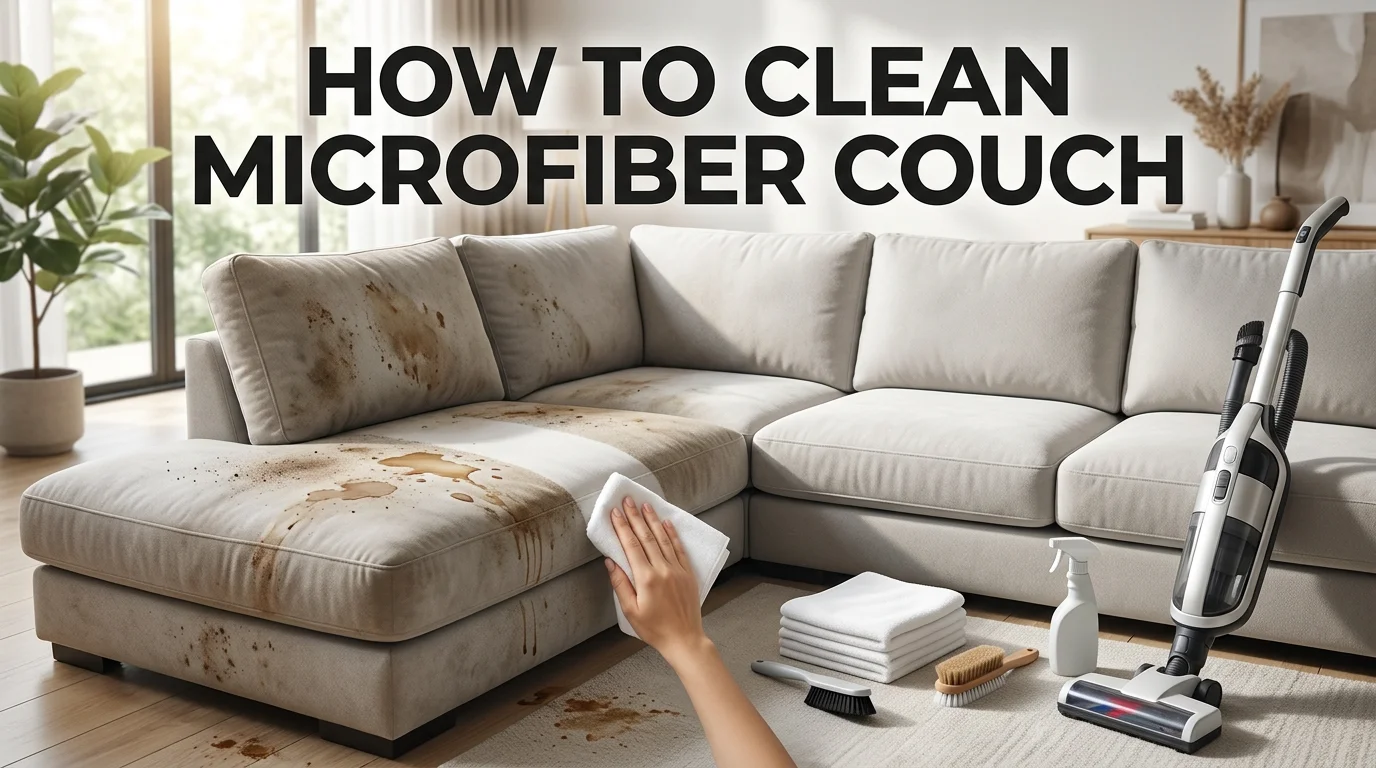
Flip up a seat cushion and look for the small fabric tag stitched to the deck underneath. One letter printed on that tag decides everything that follows, because water on the wrong microfiber leaves a mark far uglier than the spill did. Knowing how to clean microfiber couch upholstery is mostly about knowing which of the four cleaning codes you have. Below is the code system, the six steps that follow from it, and what the job costs in Canada either way. For the full picture, read Window Installation.
The short answer: Check the cleaning code tag first. Vacuum the whole couch, then test your cleaner on a hidden patch. Mist one panel at a time with 99% isopropyl alcohol for an S code, or mild soapy water for a W code. Blot with a white cloth, dry it quickly, and brush the nap back.
TL;DR
- The tag code, not the stain, picks your cleaner. S means solvent, W means water, WS means either, X means vacuum only.
- Buy 99% isopropyl alcohol, not 70%. The extra water in the weaker bottle is what leaves rings.
- Mist, never soak. A panel should feel barely damp and dry within two hours with a fan on it.
- Work stains from the outside edge inward, then feather the damp area outward so no hard line dries in.
- Supplies cost roughly CA$15 to CA$25. A professional sofa clean in Ontario runs CA$120 to CA$200.
Cleaning codes: what W, S, WS and X actually mean
Upholstery makers print a single-letter cleaning code on a tag under the seat or inside the skirt.
It tells you what the backing and the dye can survive, which is a different question from what the surface fibres can survive. Makers stay conservative about it, and ignoring the label voids most fabric warranties.
| Code | What it means | Use this | Skip this |
|---|---|---|---|
| W | Water-based cleaning is safe | Clear dish soap in warm water | Solvents, soaking, hot steam |
| S | Solvent only; water stains it | 99% isopropyl alcohol | Water in any form |
| WS or SW | Either method is fine | Soap first, alcohol for grease | Bleach, chlorine cleaners |
| X | No liquid at all | Soft brush and gentle suction | Every cleaner you own |
Missing tag? Second-hand and flat-pack furniture often arrives with the label cut off. Test for it instead. Dab a cotton swab of water on the back panel near the floor, let it dry fully, and look at the spot in daylight. A faint, pale ring indicates you are working with an S code, and no change at all means the water is safe.
What you’ll need
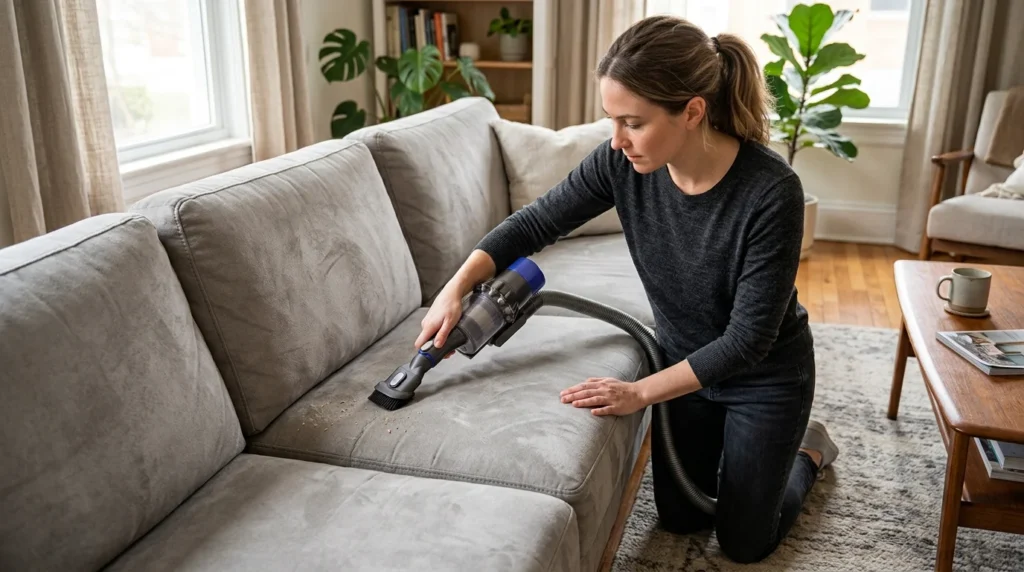
- A vacuum with a brush or upholstery attachment
- Two 500 mL spray bottles, one for cleaner and one for plain water
- Four or five white cloths, since dyed cloths bleed into pale fabric
- 99% isopropyl alcohol, about CA$6 to CA$9 a bottle at Shoppers Drug Mart, Rexall, or Walmart Canada
- Clear, dye-free dish soap
- A soft-bristled brush; a clean nail brush does fine
- Baking soda for odours, and a box fan for drying
The choice of alcohol matters more than any other purchase here. Canadian pharmacies stock 70% and 99% isopropyl side by side, usually within a dollar of each other, and most shoppers grab the familiar 70% first-aid bottle. Nearly one third of that weaker bottle is water, which is exactly what an S tag forbids. The 99% flashes off in minutes and leaves nothing behind.
While the vacuum is out with the brush head on, run it along the trim behind the couch too. Dust that sits on painted baseboards and trim gets kicked straight back onto damp upholstery, and cleaning both at once saves you doing the sofa twice.
How to clean microfiber couch fabric in 6 steps
- Vacuum every surface first. Lift the cushions out, run the brush head over each face, and get into the seams with the crevice tool. Grit left in the weave turns into mud the second you add liquid.
- Test your cleaner on a hidden patch: the back panel or the underside of a cushion works. Spray a small patch, blot it, let it dry, then check for lightening or a stiff feel before you touch the front.
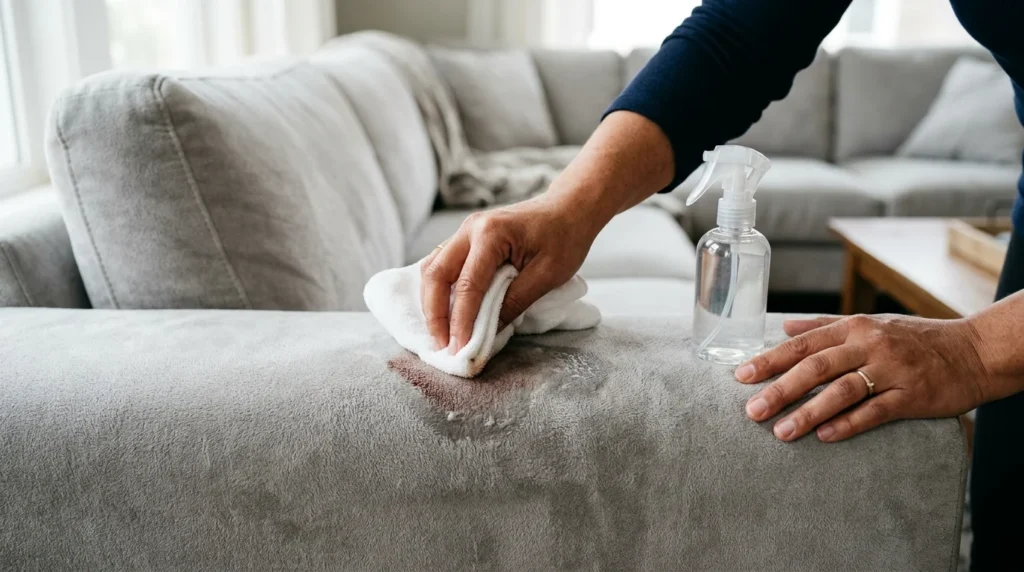
- Mist one panel at a time. Hold the bottle about 20 cm away and sweep across the section until the surface looks evenly damp. Wet fabric is the mistake here; damp fabric is the target.
- Work each mark from the outside in. Rub in small circles with a white cloth, starting at the edge of the stain and moving toward the middle. Going the other way pushes the mark wider into clean fibres.
- Blot with a dry cloth and swap it often. Press, lift, and check the cloth. Once it stops picking up colour, move on rather than scrubbing harder.
- Dry fast, then brush the nap. Point a fan at the panel and give it an hour or two. When the fabric is fully dry, it will look patchy and matted, and a soft brush stroked in one direction brings the colour back.
Repeat the whole cycle on a stubborn mark rather than doubling the pressure.
Microfiber is a woven polyester with a raised pile. Hard scrubbing flattens that pile permanently, and no cleaner reverses it. Two gentle passes beat one hard pass.
The soap and water method for W and WS tags
Mix 5 mL of clear dish soap into 500 mL of warm water at roughly 30 C. Hot water sets protein stains such as milk and blood, so keep it comfortable rather than steaming. If you live with hard water, and much of southern Ontario and the Prairies does, use distilled water from the grocery aisle. Dissolved minerals are half the reason a cleaned patch dries with a pale outline.
Work the same six steps, then add a rinse pass: mist the panel with plain water and blot it again. Plain water lifts the soap back out. Soap left in the fibres stays sticky, attracts dust within days, and the couch ends up dirtier than it started.
Water stains and rings, and how to feather them out
A water ring is not really a stain.
It is a tide line. Liquid carries loose dirt and minerals to the rim of the damp patch, where they dry in a concentrated band. That is why the middle of the mark looks fine and only the border shows.
Fixing it is counterintuitive. Lightly dampen the whole panel, edge to edge, using the cleaner your code allows, so no sharp boundary remains anywhere. Then brush outward from the centre with a soft brush while it dries, which spreads the drying edge across a seam instead of the middle of a cushion. Coffee tables address the matching version of this problem, and our guide to lifting water rings out of wood covers the finish side on the same evening.
The stains Canadian living rooms actually produce
- Winter salt and slush. Boot spray and coat sleeves carry road salt onto the arms and skirt from November onward. It dries to a chalky white ring that alcohol cannot touch, because salt needs water to dissolve. On a W or WS couch, use 250 mL of warm water with 15 mL of white vinegar, blot, then rinse. On an S couch, vacuum away the dried crust first, then treat only the remaining grime.
- Pet accidents. Blot hard with a paper towel until no more transfers occur, cover the area with baking soda, and leave it for 4 to 6 hours before vacuuming. Then clean by code. Skipping the baking soda leaves an odour that comes back every humid week.
- Grease and food. Sprinkle baking soda or cornstarch on the mark and let it sit for 20 minutes to draw up the oil. Vacuum it off, then finish with alcohol, which handles oil better than soap on any cloth that allows it.
- Ink and marker. Dab, never wipe, using a cotton swab dipped in 99% alcohol. Change swabs constantly. One wipe turns a pen dot into a streak you cannot undo.
Drying, static, and staying ahead of it
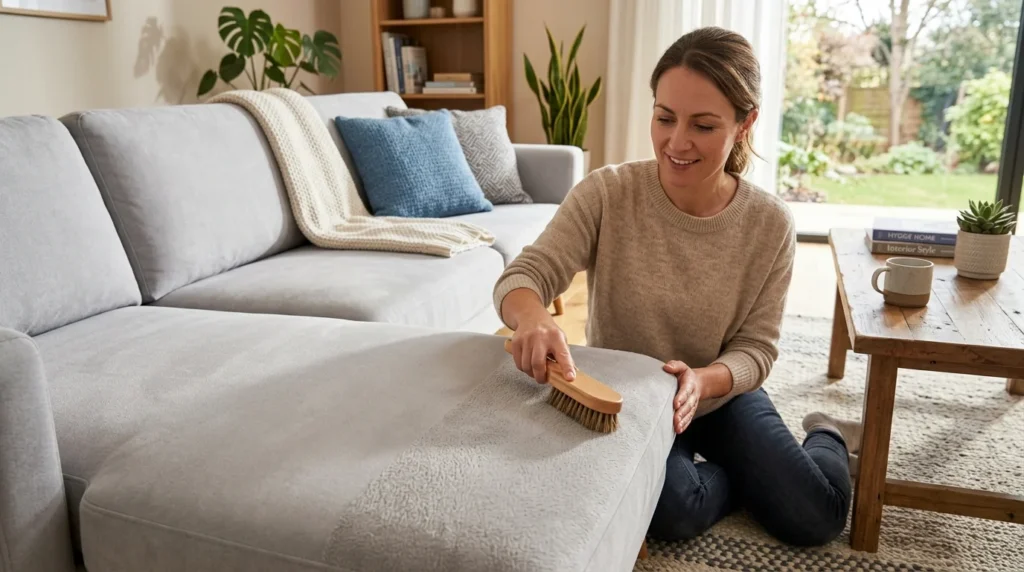
Drying speed decides whether the job looks professional. In a heated home in February, a properly misted panel dries in about an hour with air moving over it and in about a day without. Open a window if the weather allows, and put a fan on the cushions rather than waiting. A fan with dusty blades undoes the work, so wipe the grille down before you aim it at wet fabric.
Static is the quiet Canadian problem with this fabric. Furnace-dried winter air drops indoor humidity well below 30%, and charged polyester pulls in dust and pet hair like a magnet. Running a humidifier keeps the humidity at or below 35% to noticeably reduce the clobber, and you will vacuum less of it. It also stops the small shock you get standing up off the seat in January.
Maintenance gets simple after that. Vacuum weekly in a busy house, spot-treat spills the same day they happen, and run a full clean twice a year. Add a third pass if you have a shedding dog or a toddler. Rotate the cushions monthly so one seat does not go shiny while the rest stays matte.
When paying a professional makes sense.
Three situations justify the invoice. An X-code couch that needs more than vacuuming is one. Another is an expensive piece whose dye you would rather not gamble with. Years of built-up body oil that spot cleaning no longer reaches is the third. Quotes we found in Ontario ran CA$120 to CA$200 for a three-seat sofa. A Loveseat costs around CA$90 to CA$150, and most companies offer discounts if you add chairs.
Renting or buying a portable extractor sits between the two options. Canadian Tire and Home Depot Canada both carry compact spot cleaners priced around CA$130 to CA$180, which pay for themselves in two professional visits. Confirm the tag says W or WS first, because these machines are water machines.
Your next hour
Find the tag before you buy anything, because it changes the shopping list. Then set aside two hours on a day you can leave the cushions out to dry. That is the whole of how to clean microfiber couch upholstery: read one letter, mist lightly, blot patiently, and brush the pile back up.
FAQs
Damp pile lies flat. Brushing it in one direction once dry lifts the fibres, and the original shade returns.
Rarely on polyester, which holds dye well, though printed and dip-dyed fabrics vary by manufacturer. Step two exists for exactly this, and two minutes on a hidden patch settles it.
Not on S or X codes. On W and WS fabric, steam is usually tolerated, but heat can shrink the backing on cheaper pieces. Test a hidden patch with the steam head first.