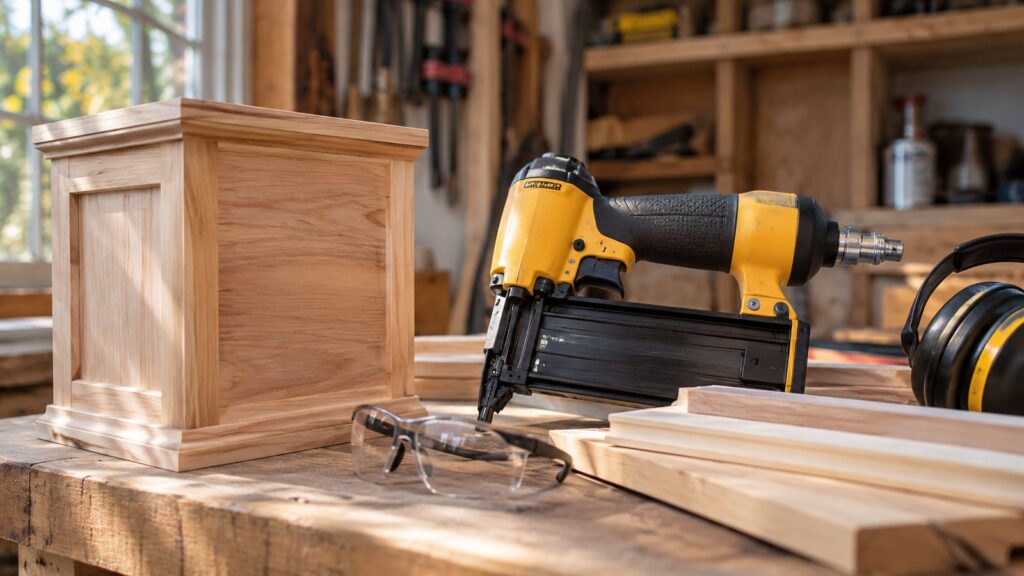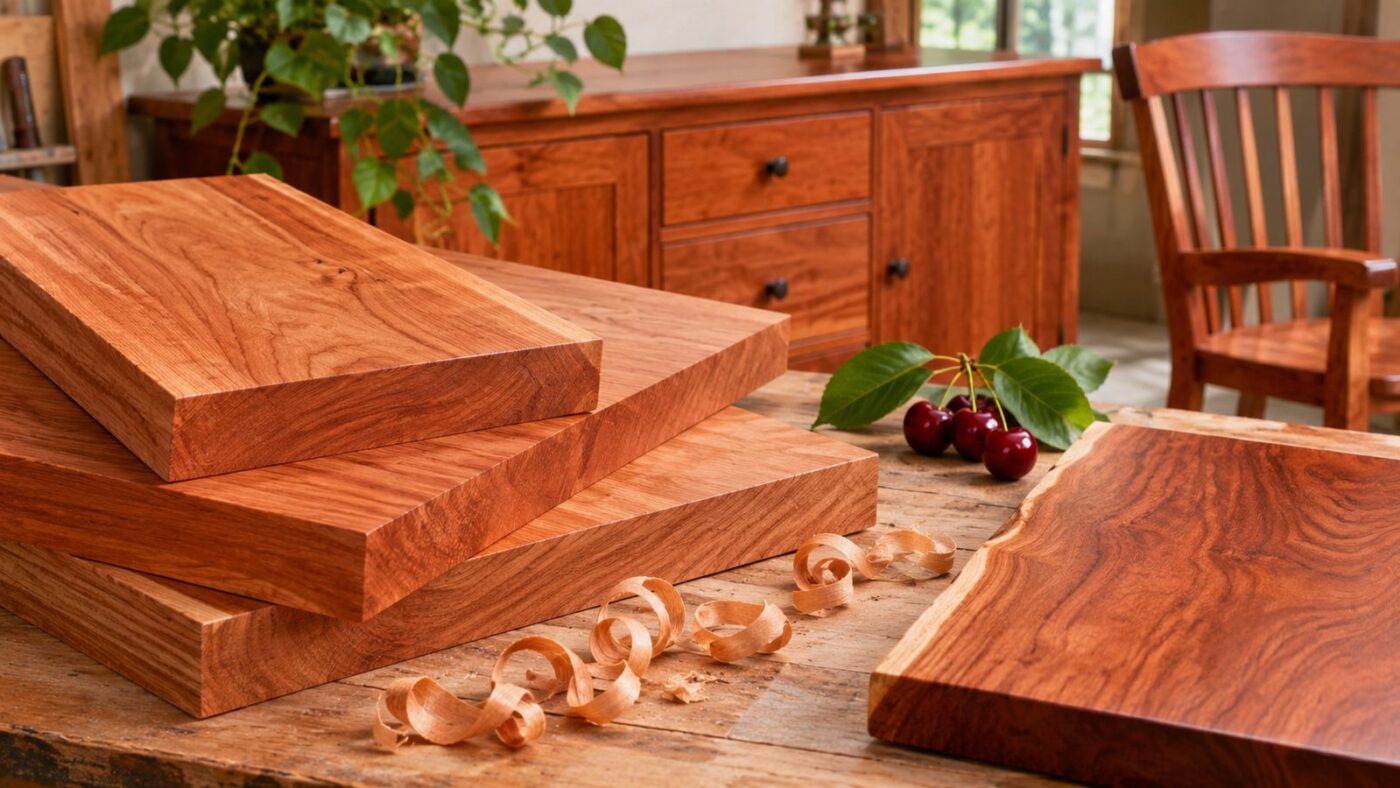
Cherry wood is a popular hardwood for furniture, cabinetry, flooring and interior millwork. Its fine grain, warm colour and smooth finishing qualities make it appealing for both traditional and contemporary Canadian homes. However, different species sold as cherry have distinct hardness, appearance and working characteristics. Understanding these differences helps you choose suitable wood for your project.
Cherry Wood at a Glance
| Property | Details |
|---|---|
| Main American species | American black cherry (Prunus serotina) |
| Other genuine cherry | European cherry (Prunus avium) |
| Brazilian cherry | Jatoba (Hymenaea courbaril), not true cherry |
| American cherry hardness | 950 lbf (Janka) |
| European cherry hardness | Approximately 1,150 lbf (Janka) |
| Jatoba hardness | 2,690 lbf (The Wood Database) |
| Grain | Fine, generally straight and uniform |
| Natural colour | Pinkish tan to reddish brown |
| Aging | Darkens with light exposure |
| Common applications | Furniture, cabinets, flooring, millwork and turning |
| Relative cost | Mid-to-upper range for domestic hardwood |
Quick Takeaways
- American black cherry is the traditional North American furniture and cabinetry choice.
- Brazilian cherry is jatoba, a much harder tropical hardwood.
- European cherry is another genuine cherry species with slightly higher hardness.
- Natural colour deepens with light exposure and aging.
- The wood machines well and accepts clear finishes beautifully.
- Staining requires care because uneven absorption can cause blotching.
- Oak and maple generally offer better resistance to everyday dents.
What Is Cherry Wood?
The term cherry wood usually describes lumber from trees in the Prunus genus. American black cherry is the most familiar furniture-grade species in North American woodworking. Its attractive colour, consistent texture and manageable hardness make it suitable for detailed interior projects. American black cherry grows naturally across eastern North America. Its native range includes southern Ontario, as confirmed by the Ontario government’s tree information. The species is also known as wild black cherry and American cherry.
American Black Cherry (Prunus serotina)
American black cherry has a naturally warm appearance that changes as the timber ages. Freshly cut heartwood typically displays light pinkish-brown tones, while older boards develop deeper reddish-brown colours. The sapwood is usually pale yellowish and can create noticeable colour differences within individual boards. Its fine, relatively straight grain creates a smooth surface for furniture and cabinetry. It also machines, sands and finishes well, making it popular among cabinetmakers and furniture builders. The natural patina gives finished pieces additional character over time.
Brazilian Cherry (Jatoba)
Brazilian cherry is the common trade name for jatoba, scientifically known as Hymenaea courbaril. Despite its familiar name, it isn’t botanically related to genuine cherry species. It comes from tropical Central and South American regions. Jatoba is substantially harder and denser than American black cherry. The Wood Database reports a Janka hardness rating of 2,690 lbf, compared with 950 lbf for black cherry. Other industry charts report lower jatoba ratings, including approximately 2,350 lbf, depending on the reference data. Its colour ranges from orange-brown to deep reddish brown, sometimes with darker streaks. Its interlocked grain and density make machining more challenging, although it performs well in demanding flooring applications.
European Cherry (Prunus avium)
European cherry, also called sweet cherry or wild cherry, is a genuine cherry species native to Europe and Asia. It has a fine to medium texture and generally close grain. Fresh heartwood appears pinkish brown before gradually developing a deeper golden-brown colour. The Wood Database lists its Janka hardness at approximately 1,150 lbf. This places it slightly above American black cherry, although both remain softer than common oak and hard maple. European cherry is used for furniture, decorative interiors, veneers and selected flooring projects.
Cherry Properties and Performance
Understanding its physical properties helps determine whether this hardwood suits your intended application. Its appearance and workability are major advantages, but its moderate hardness deserves consideration. The following characteristics are particularly relevant when selecting boards.
Grain, Texture and Appearance
The grain is generally straight, fine and relatively uniform. Some boards display attractive curly patterns, mineral streaks or small natural markings. These variations add visual interest without creating an overly busy appearance. The heartwood develops a distinctive reddish-brown tone with age. Exposure to light gradually changes its colour, creating a natural patina. This transformation makes matching new replacement boards with older furniture more difficult.
Hardness and Durability
The Janka hardness test measures resistance to indentation using a steel ball. Higher numbers generally indicate better resistance to dents and surface damage. It is a useful comparison tool, although it doesn’t measure every aspect of wood durability. American black cherry measures approximately 950 lbf. This makes it softer than oak, hard maple and jatoba, so heavy furniture and dropped objects can leave dents more easily. Its moderate hardness remains suitable for many furniture and cabinetry applications.
Workability and Finishing
This species is known for excellent machining and woodworking characteristics. It cuts, sands, shapes and turns with relatively little difficulty when tools are sharp. Its fine texture also produces an attractive surface with careful sanding. Clear finishes generally highlight its natural colour and grain. Staining can be less predictable because uneven absorption sometimes creates dark patches. A suitable sanding sealer, pre-stain conditioner or gel stain can help control this problem.
Cherry Wood vs Oak, Walnut and Maple
Choosing between hardwood species depends on appearance, hardness, maintenance and project requirements. Cherry offers warm colour and smooth grain, while other species provide different levels of durability and visual character. This comparison uses commonly referenced Janka values for the listed species.
| Wood species | Janka hardness (lbf) | Grain and appearance | Main advantage |
|---|---|---|---|
| American cherry | 950 | Fine, straight, reddish brown | Warm natural patina |
| Red oak | 1,290 | Open grain, prominent patterns | Good everyday durability |
| White oak | 1,360 | Distinctive grain, light brown | Hardness and durability |
| Black walnut | 1,010 | Attractive, varied dark brown | Rich natural colour |
| Hard maple | 1,450 | Fine, pale and subtle | Better dent resistance |
| Jatoba | 2,690 | Interlocked, reddish brown | Exceptional hardness |
Cherry vs Oak
Oak is harder and generally better suited to floors exposed to heavy everyday traffic. Its prominent grain creates a more traditional or rustic appearance. Cherry offers a smoother visual texture and a warmer colour that deepens with time. Choose cherry for refined furniture and cabinetry where appearance matters most. Choose oak when you want greater resistance to dents and more pronounced grain character.
Cherry vs Walnut
Black walnut and American cherry have similar Janka hardness ratings. Walnut has a naturally darker brown appearance, while cherry develops warmer reddish tones. Both work well for premium furniture and decorative cabinetry. Walnut is a strong choice for darker interiors and contrasting finishes. Cherry suits rooms where you prefer a lighter starting colour that gradually becomes richer.
Cherry vs Maple
Hard maple is considerably harder than American black cherry. Its pale colour and subtle grain suit contemporary cabinetry, work surfaces and furniture. Cherry provides more colour variation and a warmer appearance. Choose maple for applications where resistance to everyday wear matters. Choose cherry when you value its natural aging and refined grain.
Best Uses for Cherry in Canadian Homes
Its combination of workability, appearance and moderate hardness supports several interior applications. The right choice depends on expected wear, maintenance and your preferred design style.
Furniture
Dining tables, desks, dressers, bed frames and cabinets are common applications. The fine grain gives furniture a clean, polished appearance. Its aging process also creates a distinctive finish that develops over years of use. For dining tables, consider protective finishes and suitable surface protection. Avoid dragging heavy objects across the top because dents and scratches can become visible. If a hot mug or wet glass leaves a white mark, see our guide to removing water rings from wood. A clear protective coating helps preserve the surface.
Kitchen and Bathroom Cabinetry
Cherry is well suited to kitchen cabinets, bathroom vanities and built-in storage. Its smooth texture creates attractive cabinet doors and drawer fronts. The warm colour also pairs well with neutral walls, stone counters and metal hardware. Keep moisture exposure under control, particularly around sinks and dishwashers. Wipe spills promptly and avoid leaving standing water on exposed surfaces. Proper sealing helps protect the wood during regular household use.
Hardwood Flooring
Cherry flooring offers a warm, refined appearance that becomes richer with age. Its moderate hardness makes it less resistant to dents than oak, maple and jatoba. This matters in busy Canadian households with pets, children and frequent visitors. Use suitable protective mats and felt furniture pads. Keep grit away from the surface because abrasive particles can damage the finish, and follow our guide to cleaning hardwood floors safely. Consider harder alternatives for heavily used entryways and other high-traffic areas.
Millwork and Turned Objects
Interior trim, mouldings, decorative panels and custom joinery benefit from its fine grain. Woodworkers also use it for bowls, handles, small decorative objects and turned pieces. Its workability makes detailed shaping easier than with many dense tropical hardwoods.
How to Finish Cherry Properly
A suitable finish protects the surface while allowing its natural colour to remain visible. Your choice should depend on the intended use, desired sheen and maintenance expectations. Always test the finish on an offcut before treating the final project.
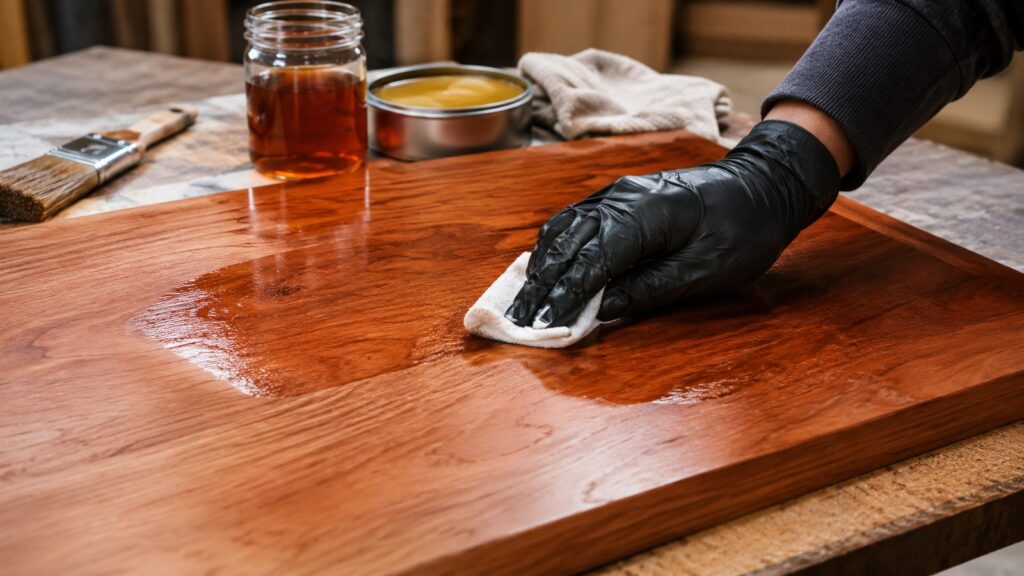
Oil Finishes
Oil finishes enhance the grain and create a natural-looking surface. They can deepen the reddish tones and provide an attractive low-sheen appearance. Follow the manufacturer’s application and curing instructions. Oil finishes may require periodic maintenance. They generally provide less surface protection than durable film-forming coatings. Consider them for furniture that benefits from a natural tactile finish.
Shellac Finishes
Shellac creates a smooth, warm finish that complements the natural colour. It works particularly well for decorative furniture and traditional woodworking projects. It also offers a useful sealer coat before certain finishing systems. Shellac is less resistant to water and alcohol than many modern coatings. Test compatibility before applying additional products. Protect finished surfaces from moisture and hot objects.
Lacquer Finishes
Lacquer produces a smooth protective coating with several sheen options. It suits furniture, cabinet doors and decorative interior millwork. Its appearance can highlight the fine grain without hiding the natural colour. Application requires suitable ventilation and careful product handling. Follow the manufacturer’s safety instructions, especially when spraying. Keep ignition sources away from flammable finishing vapours.
Preventing Uneven Staining
Cherry can develop blotchy patches when conventional stain absorbs unevenly. This is particularly noticeable on large flat surfaces and cabinet doors. Preparation and a controlled finishing process help produce more consistent results. Try these precautions:
- Sand evenly using consistent grit progression.
- Remove sanding dust before applying any finish.
- Apply a compatible pre-stain conditioner or sanding sealer.
- Consider gel stain when a more controlled colour is needed.
- Test the entire finishing schedule on scrap boards.
- Apply thin, even coats and follow the recommended drying times.
Letting the Natural Colour Develop
You can allow unfinished or clear-coated boards to develop their natural patina. Light exposure gradually changes the pinkish-tan colour into deeper reddish-brown tones. This approach preserves the natural appearance without relying on artificial stain. New boards can also be exposed to indirect or carefully controlled sunlight to encourage more even colour development. Rotate boards and avoid leaving isolated sections covered. Excessive direct sunlight can cause uneven colour changes, so use caution.
Care and Maintenance
Regular maintenance helps preserve the appearance and protective finish of finished surfaces. The correct cleaning method depends on whether the surface has oil, lacquer, shellac or another coating. Always follow the finish manufacturer’s recommendations. Use these practical habits:
- Dust furniture regularly with a soft, clean cloth.
- Wipe spills promptly to prevent moisture damage.
- Use coasters beneath drinks and protective pads beneath ornaments.
- Add felt protectors to furniture legs.
- Avoid harsh chemicals and abrasive cleaning materials.
- Keep flooring free from grit and loose dirt.
- Use cleaning products approved for the specific floor finish.
- Maintain stable indoor humidity to reduce seasonal movement.
For repairs involving damaged or missing wood, see the wood filler selection guide.
Sustainability and Responsible Sourcing
Responsible sourcing matters when purchasing domestic or imported hardwood. American black cherry grows naturally across eastern North America, including Ontario. Choosing locally sourced lumber can help reduce transportation requirements and support regional suppliers. Look for credible documentation when buying lumber or finished furniture. Forest Stewardship Council (FSC) certification provides a recognized system for responsible forest management and supply-chain traceability. Check the product’s certification claim and supplier documentation rather than relying on a general sustainability statement. Reclaimed lumber is another option worth considering. It can give existing material another use while reducing demand for newly harvested timber. Ask suppliers about the wood’s origin, previous treatments and suitability for indoor applications.
Safety When Working With Cherry
Woodworking creates fine airborne dust during cutting, routing and sanding. This dust can irritate the eyes, nose and respiratory system. Black cherry sawdust has also been associated with respiratory effects, including wheezing. Wear an appropriate dust mask or particulate respirator when sanding. Use dust extraction and adequate ventilation whenever possible. Eye protection is also advisable when cutting, shaping or sanding boards. Follow product-specific precautions when applying oils, shellac or lacquer. Some finishing products release harmful vapours or present fire risks. Read labels carefully and work in a suitable, ventilated area.
Is Cherry Worth Choosing?
Cherry is an excellent option when you want attractive furniture, refined cabinetry and warm interior finishes. Its fine grain, easy workability and natural colour development make it a popular furniture hardwood. Its main limitation is moderate hardness, which makes it more vulnerable to dents than oak or hard maple. For furniture and decorative cabinetry, American black cherry offers a strong balance of appearance and workability. For high-traffic flooring, oak, hard maple or jatoba may provide better resistance to wear. Your decision should reflect the intended application rather than appearance alone.
Frequently Asked Questions
Is cherry good for furniture? Yes, it is well suited to furniture because of its fine grain and excellent workability. It creates smooth surfaces and develops an attractive reddish-brown patina. Use suitable protective finishes to reduce damage from daily use. Is cherry harder than oak? No, American black cherry is softer than both red and white oak. Its Janka rating is approximately 950 lbf, compared with 1,290 lbf for red oak. Oak generally offers better resistance to dents and surface wear. Does cherry darken over time? Yes, exposure to light gradually darkens its natural colour. Fresh boards often appear pinkish tan before developing deeper reddish-brown tones. This natural aging process is one of its most recognizable characteristics. Is Brazilian cherry real cherry? No, Brazilian cherry is a trade name for jatoba (Hymenaea courbaril). It belongs to a different botanical family from genuine cherry species. Its exceptional hardness makes it popular for demanding flooring applications. Does cherry stain evenly? Not always, because uneven absorption can create blotchy areas. A sanding sealer, pre-stain conditioner or gel stain can help control the result. Testing on scrap material is recommended before finishing an entire project. Is cherry suitable for hardwood flooring? Yes, it can be used for interior hardwood flooring. Its moderate hardness means it dents more easily than oak, maple and jatoba. Consider household traffic and maintenance needs before selecting it. Is cherry expensive in Canada? It generally falls within the mid-to-upper price range for domestic hardwoods. Its grade, board width, availability, thickness and supplier affect the relative cost. Imported species and specialty grades can have different pricing structures. How do you maintain cherry furniture? Dust it regularly and wipe spills promptly. Use suitable furniture cleaners and avoid excessive moisture or abrasive products. Apply maintenance products according to the existing finish manufacturer’s instructions.
Final Thoughts
Cherry offers a distinctive combination of warm colour, fine grain and excellent woodworking qualities. American black cherry is particularly appealing for furniture, cabinets and decorative interior details. Its moderate hardness means you should consider the expected wear before selecting it for flooring. Compare the available species, inspect the grain and ask about responsible sourcing before purchasing. A suitable finish and consistent maintenance will help preserve the wood’s appearance for years. Choose the species that best matches your project’s durability requirements, budget and preferred interior style. —