A successful interior painting project depends more on preparation than color alone. Clean walls, repaired damage, suitable primer, and the right sheen improve the finish. Canadian homeowners should also budget for regional labor costs, ventilation, and older-home paint hazards.
Direct answer: Interior painting starts with clean, sound walls, then patching, sanding, priming where needed, and two thin finish coats. In Canada, professional wall painting often costs about CAD $2 to $4 per square foot. The right sheen depends on traffic, moisture, and how often the room gets cleaned.
| Topic | Practical Canadian guidance |
|---|---|
| Professional wall painting | About CAD $2–$4 per sq. ft. for walls |
| Walls, ceilings, and trim | About CAD $3–$5 per sq. ft. |
| Typical single room | About CAD $400–$800 |
| Typical full interior | About CAD $3,000–$7,000 for a 1,500–2,000 sq. ft. home |
| Common wall finish | Eggshell or washable matte |
| Trim and doors | Satin or semi-gloss |
| Typical application | Two finish coats after suitable prep |
| Older-home caution | Check suspect old coatings before sanding or stripping. |
Key Takeaways
- Prep affects the final appearance as much as the paint itself.
- Two thin coats usually produce more even coverage than one heavy coat.
- Sheen should match traffic, moisture, cleaning needs, and wall condition.
- Canadian pricing varies by region, surface condition, ceiling height, and project scope.
- Older homes may need lead-paint testing before sanding, scraping, or stripping.
What Interior Painting Should Include
A good repaint begins with an honest surface check. Look for nail holes, dents, cracked caulk, peeling areas, stains, and glossy patches. Fixing those defects first prevents them from showing through fresh paint. The basic scope includes protection, cleaning, repairs, sanding, spot priming, cutting in, rolling, and cleanup.
Ceilings, trim, doors, and closets may be separate items in a professional quote. Confirm the scope before comparing prices, because cheaper quotes may cover fewer surfaces.
How Much Does It Cost in Canada in 2026?
HomeStars lists interior walls at roughly CAD $2 to $4 per square foot in its 2026 guide. Walls, ceilings, and trim rise to about CAD $3 to $5 per square foot. A standard single room is listed around CAD $400 to $800. The same guide places a 1,500- to 2,000-square-foot interior at CAD $3,000 to $7,000.
Toronto and Vancouver can sit above national averages because labor and overhead are higher. Treat national ranges as planning figures, not guaranteed quotes.
| Project scope | Approximate 2026 Canadian range |
|---|---|
| Interior walls only | CAD $2–$4 per sq. ft. |
| Walls, ceiling, and trim | CAD $3–$5 per sq. ft. |
| Standard bedroom | CAD $400–$800 |
| Living or dining room | CAD $600–$1,200 |
| Bathroom | CAD $300–$600 |
| Full 1,500–2,000 sq. ft. interior | CAD $3,000–$7,000 |
Paint quality, patching, high ceilings, color changes, and detailed trim can raise labor or material needs. A third coat can also increase the quote when coverage is difficult. Ask each painter to list prep, primer, coat count, paint line, cleanup, and taxes.
Prepare the Room Before Opening Paint
Move furniture away from the walls and protect floors with drop cloths. Remove switch plates, outlet covers, curtain hardware, and easy-to-remove wall fixtures. Photograph complicated hardware before removal, so reassembly is faster.
Measure wall lengths and ceiling height before estimating paint quantities. HomeCraftly’s measuring tape guide explains practical metric and imperial readings for home projects. Record each wall separately so you can more easily account for doors and large openings.
Wash dusty walls and degrease kitchen surfaces before sanding or coating them. Clean trim deserves attention because grime can weaken tape adhesion and spoil sharp lines. HomeCraftly’s baseboard-cleaning guide covers safe methods for painted wood and MDF.
Patch nail holes, dents, and damaged drywall before applying primer. HomeCraftly’s wall-patching guide explains when spackle, mesh, or a drywall insert makes sense. Use wall compound on drywall, while HomeCraftly’s wood-filler guide is better for damaged wood trim.
Choose Sheen by Room, Not by Trend
Sheen changes appearance, cleanability, and how strongly wall defects catch the light. Lower sheens hide small imperfections better, while glossier finishes reflect more light. Busy or damp rooms usually benefit from finishes that tolerate regular wiping.
| Finish | Good uses | Main tradeoff |
|---|---|---|
| Flat or matte | Ceilings, adult bedrooms, low-traffic rooms | Hides flaws well but may be harder to scrub |
| Eggshell | Living rooms, bedrooms, hallways | Balanced appearance and cleanability |
| Satin | Kitchens, bathrooms, busy family areas | Easier cleaning with more visible sheen |
| Semi-gloss | Trim, doors, moldings | Durable and washable but highlights surface defects |
Home Depot Canada describes flat or matte paint as low-shine and useful for hiding minor imperfections. Its guidance presents eggshell as a middle ground with more cleanability than flat paint. Match the finish to the room instead of choosing one sheen for the whole house.
A Practical Seven-Step DIY Painting Sequence
Once the surface is ready, keep the application sequence simple. Work one wall at a time so cut-in edges stay manageable. Follow the recoat time printed on the paint label.
- Measure the room and buy enough paint from the same product line and sheen.
- Protect floors, move furniture, and remove covers or hardware that interrupt clean edges.
- Clean, patch, sand, and remove dust until the wall feels smooth under side lighting.
- Prime bare drywall, repairs, stains, or surfaces that need better adhesion.
- Cut in along ceilings, corners, trim, and edges with an angled brush.
- Roll two thin finish coats, keeping a wet edge and consistent pressure.
- Remove tape carefully, reinstall hardware, and inspect the walls under daytime light.
Two thin coats are usually safer than loading the wall with one heavy coat. Thick paint can sag, dry unevenly, and leave a different sheen across the surface. Let each coat reach the manufacturer’s stated recoat time before applying the next one.
Safety in Older Canadian Homes
Health Canada says homes built before 1960 probably contain lead-based paint. Homes built from 1960 to 1990 may also contain lead in some coatings. Do not sand, scrape, or burn suspect paint before testing or getting useful professional advice.
Canada also regulates VOC concentrations in many architectural coatings sold in the country. Paints can release VOCs as solvents evaporate during drying and curing. Use ventilation during and after painting, and follow the product label for safety instructions.
DIY or Hire a Professional?
DIY works well for a sound room with standard ceilings and limited repairs. Hiring a painter becomes more attractive as access, repairs, trim detail, or schedule pressure increases. Suspected hazardous coatings also make professional assessment more sensible.
| Situation | DIY may fit. | Professional help may fit. |
|---|---|---|
| One standard bedroom | Yes, with basic tools and time | Useful for a fast turnaround |
| Whole-home repaint | Possible, but time-intensive | Often easier for sequencing and consistency |
| High or vaulted ceilings | Harder to access safely | Better access equipment and experience |
| Heavy drywall repair | Manageable only with repair skills | Better for visible or extensive damage |
| Suspected lead paint | Do not disturb it casually. | Testing and specialist advice are safer. |
| Detailed trim and doors | Slow but possible | Faster, cleaner finish on complex work |
Get written quotes that describe the same scope before comparing contractors. Ask who supplies paint, how repairs are handled, and which surfaces receive primer. A clear scope makes a low quote easier to evaluate.
How Long Does a Repaint Take?
HomeStars estimates a professional can complete a 1,500- to 2,000-square-foot interior in roughly three to five days. A standard bedroom may take a professional one to two days. A DIY room commonly fits into a weekend when repairs are minor.
Repairs, primer, extra colors, detailed trim, and tall ceilings can extend the schedule. Drying and recoat times also vary by product, temperature, humidity, and airflow. Build the plan around the label instead of rushing the next coat.
Common Mistakes That Make Walls Look Uneven
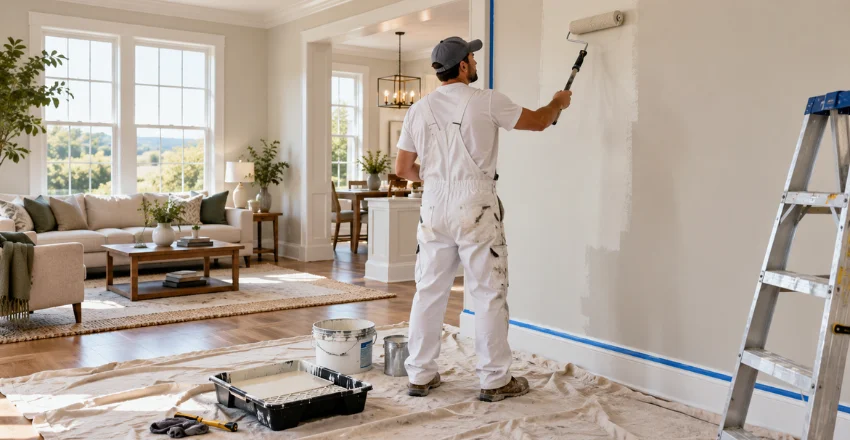
Most poor finishes start before the roller reaches the wall. Common causes include rushed repairs, dirty surfaces, weak edge work, or inconsistent application. Correcting those basics often matters more than buying the most expensive paint.
- Painting over dust, grease, or loose material.
- Skipping primer on bare repairs, stains, or difficult surfaces.
- Using a roller cover that does not suit the wall texture.
- Pressing too hard when the roller starts running dry.
- Applying one heavy coat instead of two controlled coats.
- Recoating before the previous layer is ready.
- Choosing high sheen on a wall with visible defects.
Plan the Project Before Buying Paint
Measure the room, inspect the walls, choose the sheen, and decide which repairs belong in the scope. Price materials and professional quotes using the same surfaces and coat assumptions. Then browse HomeCraftly’s home-improvement guides for the repair and finishing tasks around your next room.
Frequently Asked Questions
How much does interior painting cost in Canada?
Current Canadian guides commonly place wall painting around CAD $2 to $4 per square foot. Walls, ceilings, and trim can run closer to CAD $3 to $5 per square foot. Your city, wall condition, paint choice, ceiling height, and repair needs can move the final price.
Do I need primer before repainting a room?
Not every sound-painted wall needs a full primer coat. Primer is useful on bare drywall, patched areas, stains, glossy surfaces, and major color changes. Use the primer recommended for the surface and topcoat you selected.
How many coats of paint should I apply?
Two thin finish coats are a reliable starting point for most room repaints. Dark-to-light changes or difficult colors may need primer or an additional coat. Follow the paint maker’s coverage and recoat guidance before deciding.
Which paint finish works best for living rooms?
Eggshell is a practical choice when you want low sheen with easier cleaning than flat paint. Washable matte also works well if you prefer a softer look. Test a sample because daylight and lamps can change how sheen looks.
Can I paint indoors during a Canadian winter?
Yes, you can paint indoors during winter when the room stays within the product’s application range. Ventilation still matters, even when opening windows is less convenient. Use exhaust fans where suitable and follow the label’s temperature and airflow directions.