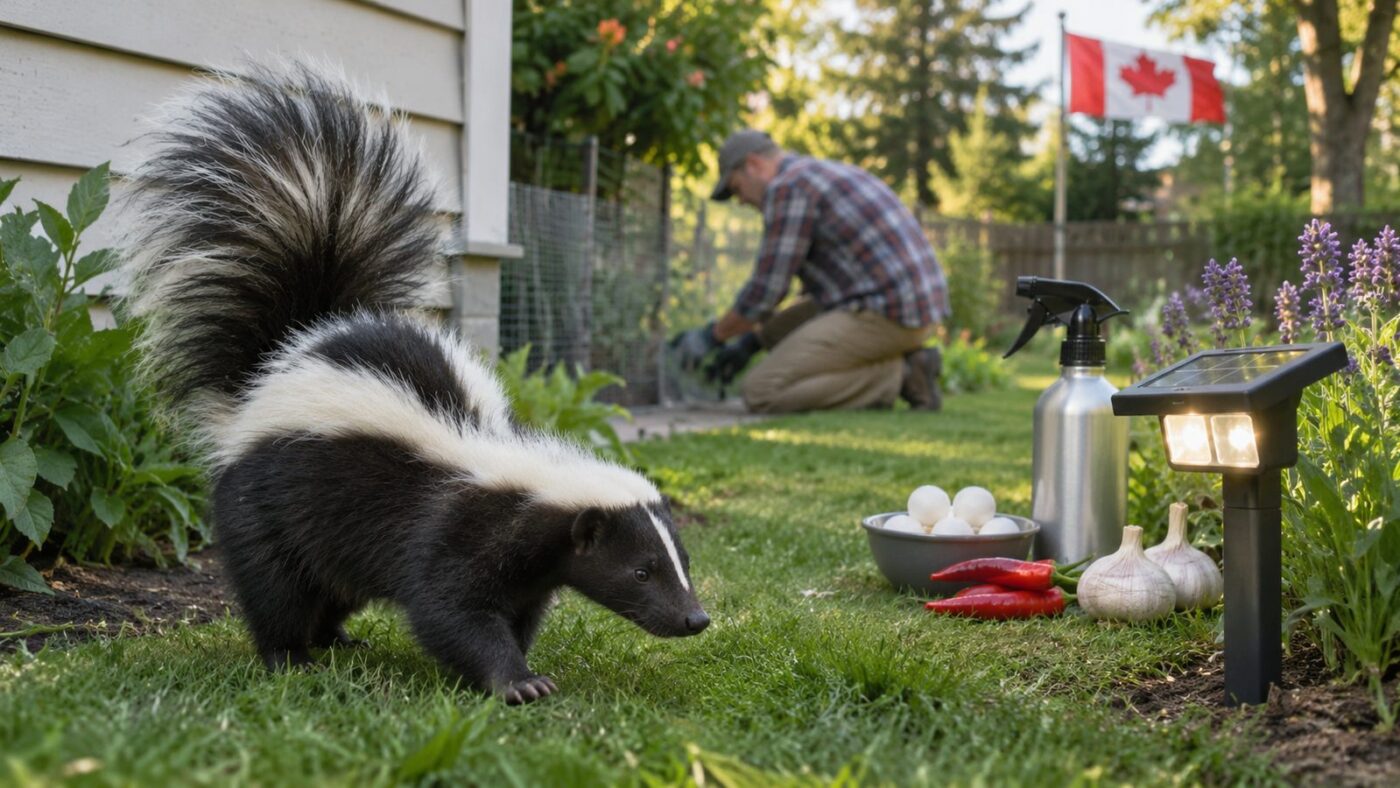
A skunk repellent can discourage unwanted visitors, but scent alone rarely solves the whole problem. Skunks return when food, shelter, or lawn insects remain easy to access. Canadian homeowners usually get better results by combining deterrents with exclusion and attractant removal.
Health Canada registers some domestic animal repellents containing pepper-derived ingredients for use against skunks and other nuisance animals. These products must be used exactly as their Canadian labels direct. Prevention still matters because repellents normally work best as one part of a broader control plan.
Quick Facts About Repelling Skunks
| Question | Practical answer |
|---|---|
| Best first step | Remove food and shelter sources |
| Useful commercial option | Canadian-registered animal repellent labelled for skunks |
| Useful non-chemical deterrents | Motion lights, secured garbage, exclusion barriers |
| Best long-term defence | Block access under decks, sheds, and porches |
| Lawn protection | Reduce attractive grubs and prevent digging |
| Important caution | Never seal an occupied den |
| Canadian rules | Wildlife and relocation rules vary by province and municipality |
Quick answer: The most reliable approach combines a labelled animal repellent with food removal, lighting, and physical exclusion. Secure garbage, remove pet food, manage lawn grubs, and close den openings only after confirming they are empty. Repellent alone may provide temporary relief, but removing what attracts the animal usually produces longer-lasting results.
Why Skunks Keep Visiting Canadian Yards
Most backyard visits have a simple cause. Skunks look for food, water, insects, and protected places to rest. Garbage, birdseed, fallen fruit, pet food, compost, and lawn grubs can make one property especially attractive. Decks, porches, sheds, and crawl spaces can also provide shelter. Openings near ground level are particularly inviting because these animals are strong diggers.
Ontario advises homeowners to remove food and seal entry points without trapping wildlife inside. Lawn damage often appears as small holes or disturbed sod. Toronto notes that grubs and larvae near the surface can attract digging. Managing the food source may therefore work better than repeatedly spraying the damaged area.
Which Skunk Repellent Methods Work Best?
Not every deterrent works the same way. Some create an unpleasant smell or taste, while others make the property less comfortable. The strongest plan combines several methods instead of depending on one product.
Commercial Pepper-Based Repellents
Pepper-based products are among the more practical retail choices in Canada. Health Canada lists capsaicin-related ingredients in registered domestic animal repellents for residential areas. One current registered product uses black pepper oil, piperine, capsaicin, and related capsaicinoids. Always confirm that the label specifically allows your intended use.
Follow application directions, safety statements, and reapplication instructions exactly. More product does not automatically provide better or longer protection. Rain, irrigation, and weather exposure can reduce outdoor performance. Some products claim protection for several weeks under suitable conditions. Reapplication requirements should come from the Canadian product label rather than a general online recommendation.
Motion-Activated Lights
Bright lighting can make a sheltered feeding or denning area less appealing. Several Canadian municipalities recommend lighting or motion-sensitive devices as humane deterrents. These methods work best where nighttime activity follows a predictable route. A motion light also avoids creating a constant disturbance for neighbours. Position it near the travel route rather than directly confronting wildlife at close range. Give the animal a clear escape path whenever you change its environment.
Vinegar-Based Odour Deterrents
The BC SPCA suggests apple cider vinegar as one possible mild deterrent around den sites. Their guidance describes placing soaked rags inside a ventilated container near the problem area. The vinegar may need refreshing because its smell fades. This approach is better treated as temporary encouragement rather than permanent control. It may help persuade an adult to choose another shelter. You still need to remove food and block access after the site becomes vacant.
Secure Garbage and Compost
Food removal is one of the most dependable prevention measures. Use tightly fitted garbage lids, secure compost, and clean spills around containers. Feed pets indoors and collect fallen fruit before nighttime foraging begins. Barbecue grease can also become an attractant. Ontario specifically recommends emptying barbecue grease traps when managing conflicts with small wildlife. Cleaning odours and food residue makes your property less rewarding.
What to Avoid When Choosing a Skunk Repellent
Mothballs are sometimes recommended in older wildlife advice. That does not mean scattering them outdoors is a safe modern approach. Canadian veterinary guidance warns that mothballs can harm pets and should not be used as general animal repellents. Ammonia also appears in older deterrent recommendations. Strong fumes may irritate people and animals, while the effect is usually temporary.
Safer approaches include labelled products, lighting, food removal, and physical exclusion. Avoid confronting or cornering the animal. Alberta advises backing away slowly when warning behaviour appears, including stamping, hissing, growling, or raising the tail. Giving wildlife space lowers the chance of being sprayed.
How to Keep Skunks Out in 7 Practical Steps
Repellents work better when they support a complete prevention plan. The following sequence addresses both immediate activity and the reasons it continues. Work cautiously around any suspected den.
1. Remove outdoor food. Bring pet food inside, secure garbage, clean barbecue grease, and collect fallen fruit.
2. Reduce lawn food sources. Address grub problems with suitable lawn-care methods rather than treating surface damage alone.
3. Add motion lighting. Place a sensor light near common travel routes, sheds, decks, or garbage storage areas.
4. Use a labelled deterrent. Choose a Canadian-registered product whose label covers the animal and treatment area.
5. Check possible den entrances. Look for disturbed soil, tracks, odour, or repeated nighttime movement.
6. Confirm the space is empty. Never permanently close an opening while an adult or young animals remain inside.
7. Install a permanent barrier. Use durable mesh or another suitable material to stop future digging and re-entry.
This layered approach removes the reward while making shelter harder to reach. Ontario and British Columbia both emphasize food management and exclusion in wildlife prevention guidance. Physical barriers usually provide more lasting protection than odours alone. If you need a larger property boundary, review Homecraftly’s Canadian fence guide before planning materials. Local bylaws can affect fence placement, height, and construction. Ground-level wildlife barriers may require a different design from ordinary privacy fencing.
How to Handle a Skunk Under a Deck or Shed
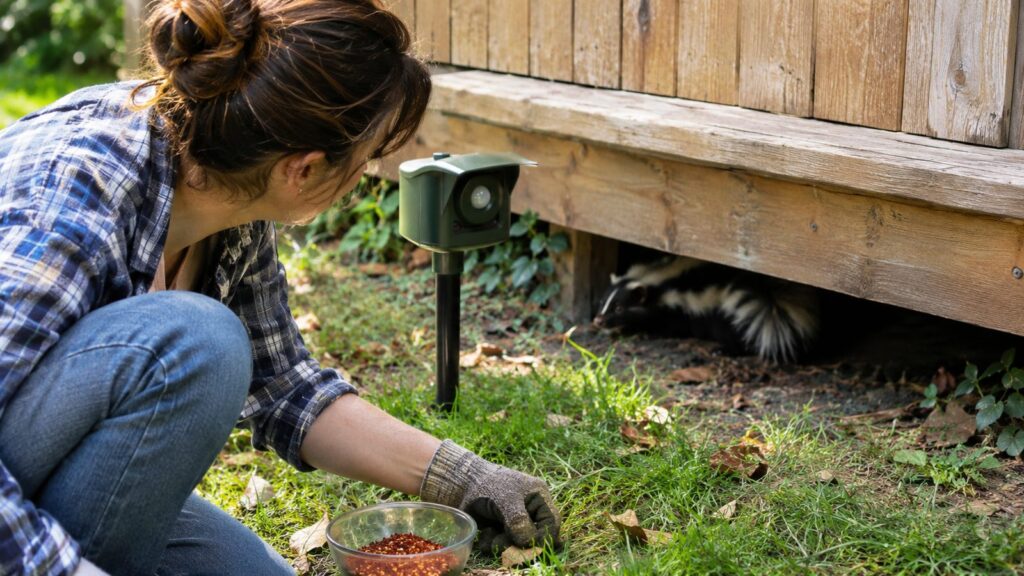
An occupied den requires more care than an occasional nighttime visitor. Never close the entrance immediately because young animals may be unable to leave. Spring and summer denning periods deserve particular caution. The BC SPCA recommends mild harassment techniques outside sensitive family periods. Light, talk radio, or mild odour deterrents can make a shelter less attractive.
The goal is voluntary departure, not trapping or injuring the animal. You can monitor an opening before sealing it. Some wildlife guidance suggests loosely placing removable material near the entrance and checking whether it moves. Permanent exclusion should begin only after you are confident the den is vacant. Once empty, repair the opening with a durable barrier. British Columbia recommends heavy wire mesh, sheet metal, or concrete around vulnerable structures. The province also notes that buried fencing helps prevent digging underneath.
Protecting Lawns and Gardens
A damaged lawn can keep attracting wildlife if grubs remain abundant. Look for repeated shallow holes, loosened turf, and activity after rain. Those signs can point toward insects near the soil surface. Avoid repeatedly treating the yard without identifying the attraction. Proper lawn maintenance and targeted grub management can reduce future digging. Homecraftly’s lawn sweeper guide for Canadian properties can also help with seasonal debris cleanup. Vegetable gardens may benefit from a combination of barriers and labelled repellents. Keep edible crops separate from products that are not approved for direct food contact. Read the full product label before treating garden areas.
Repellent Versus Exclusion: Which Is Better?
| Method | Best use | Main limitation | Long-term value |
|---|---|---|---|
| Commercial repellent | Short-term perimeter deterrence | Weather and reapplication | Moderate |
| Motion lighting | Nighttime routes and den areas | Animals may adjust | Moderate |
| Vinegar odour | Temporary mild harassment | Fades quickly | Low |
| Food removal | Preventing repeat visits | Requires consistent habits | High |
| Mesh exclusion | Decks, sheds, crawl spaces | Must confirm vacancy first | High |
| Lawn management | Reducing digging for grubs | Results may take time | High |
Verdict: exclusion and attractant removal should form the foundation of your plan. A skunk repellent is most useful as temporary support while you remove food and secure access points. That combination addresses both the animal’s behaviour and the conditions drawing it back.
Canadian Wildlife Rules Matter
Wildlife rules are not identical across Canada. Provincial and municipal requirements can affect trapping, relocation, and professional removal. Check local rules before capturing or transporting any wild animal. For example, Ontario municipalities can restrict how healthy wildlife is handled. Quebec also has relocation restrictions in certain areas because of disease-control concerns.
British Columbia regulates wildlife under provincial legislation and provides specific conflict-management guidance. Professional wildlife removal becomes sensible when a den is difficult to access. It can also help when young animals may be present. Choose a provider that uses humane exclusion and follows local regulations.
What If a Skunk Sprays Near Your Home?
Skunk spray can irritate eyes, noses, and airways. Alberta notes that exposure may cause watering eyes, nasal irritation, and nausea. Move away from the animal and avoid making sudden movements. If spray reaches your eyes, rinse them promptly with clean water. Seek medical advice if irritation is severe or continues. Pets with significant exposure should be assessed by a veterinarian when necessary. Odour cleanup is separate from prevention. Once the immediate problem is handled, remove food sources and secure shelter areas. Otherwise, another nighttime encounter may occur even after the smell disappears.
Frequently Asked Questions
What is the best skunk repellent for Canadian homes?
The best skunk repellent is usually a labelled Canadian animal-deterrent product combined with prevention. Pepper-based registered products are available for some residential applications. Food removal and exclusion provide better long-term control than relying on scent alone.
What smell keeps skunks away?
Vinegar and some commercial pepper formulations can create unpleasant odours for wildlife. Citrus and other household scents are also recommended by some municipalities. Their effects can fade, so scent should support stronger prevention measures.
Will lights keep skunks away?
Lights can discourage nighttime activity around a shelter or feeding location. Motion-sensitive lights are especially practical because they activate when movement occurs. They work better when food and denning opportunities have also been removed.
Can I use mothballs around my yard?
Mothballs are not a good general-purpose wildlife solution. Canadian veterinary guidance warns that they can harm pets, children, and the environment when misused. Choose methods intended and labelled for the location and purpose instead.
How do I stop skunks from digging under my deck?
First, confirm that no animal or young remain underneath. Encourage departure using mild disturbance, then monitor the opening before sealing it. Install durable mesh or another suitable buried barrier after the space is empty.
Do skunks return after being scared away?
They can return when the same food or shelter remains available. Removing one visitor without correcting those conditions leaves the property attractive. Secure garbage, manage food sources, and close suitable den sites after confirming vacancy.
A Better Long-Term Plan for Your Yard
A skunk repellent can buy time, but permanent prevention depends on changing the property. Remove accessible food, reduce lawn attractants, and secure openings under structures. Add a labelled deterrent or motion lighting where extra pressure is useful. Start with the easiest attractants tonight, then inspect decks and sheds during daylight. Use Homecraftly’s home and yard improvement guides when planning longer-term property upgrades. If an occupied den creates uncertainty, contact a qualified local wildlife professional instead of sealing it yourself.