A wasp trap can reduce nuisance insects around Canadian patios, decks, cottages, and outdoor eating areas. The right setup depends on the species, season, bait, and placement. Trapping works best for foraging insects, not for removing an established nest.
Quick answer: Use a reusable lure trap or simple bottle funnel with suitable bait. Place it away from patios, doors, play areas, and other busy spaces. Check it regularly, replace stale bait, and treat an active nest as a separate safety problem.
| What to consider | Practical choice |
|---|---|
| Best use | Reducing foraging yellowjackets and nuisance wasps |
| DIY container | Clean 1.5- or 2-litre plastic bottle |
| Commercial option | Reusable or disposable outdoor lure trap |
| Placement | Away from dining, play, and entrance areas |
| Bait | Protein or approved commercial attractant |
| Maintenance | Inspect and refresh as activity changes |
| Active nest nearby | Keep your distance and consider professional removal |
| Canadian pesticide products | Follow the label and look for a PCP number |
How a Wasp Trap Works Around Your Home
Most traps use food or another attractant to draw insects through a narrow entrance. The design makes it difficult for them to return through that entrance. Liquid traps may also use soapy water to prevent insects from remaining on the surface.
Traps can reduce the number of insects searching for food near a specific area. They do not guarantee removal of a colony. A large nest can keep producing workers even when several individuals are caught.
Health Canada says traps can provide short-term help around outdoor events. It also warns that bait can increase activity near the trap. That makes location as important as the container itself.
Which Type Should You Choose?
Canadian homeowners generally have three practical choices. These are disposable lure bags, reusable commercial traps, and homemade bottle traps. Each choice has different costs, maintenance needs, and target insects.
| Type | Best for | Main advantage | Main drawback |
|---|---|---|---|
| Disposable lure bag | Seasonal nuisance activity | Fast setup | Must be replaced |
| Reusable trap | Regular summer use | Refillable and durable | Requires cleaning |
| DIY bottle trap | Low-cost experimentation | Uses household materials | Results depend heavily on bait |
| Sticky visual trap | Selected species | No liquid bait needed | May catch non-target insects |
A reusable design suits homeowners who face the same problem every summer. Disposable traps make sense when you want minimal cleaning. DIY versions work well for testing placement before buying several commercial units.
Not all commercial attractants are designed for every species. Health Canada approved certain heptyl butyrate products for yellowjacket control in December 2025. Always follow the product label, and don’t add unapproved ingredients.
How to Make a Simple DIY Bottle Trap
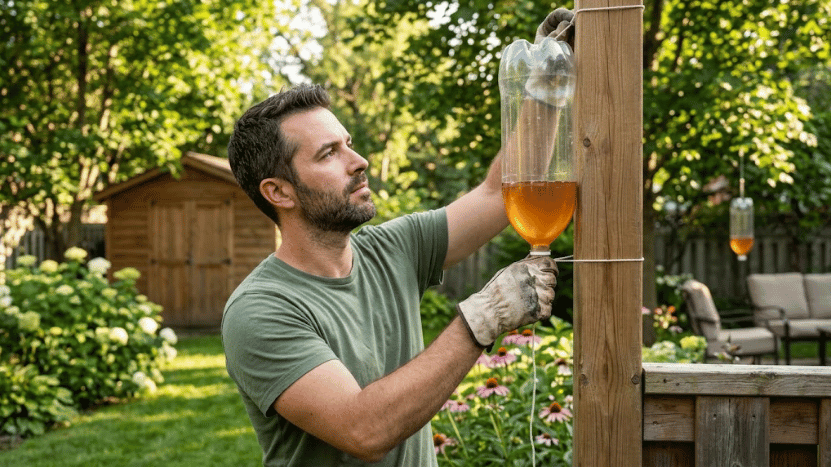
A bottle funnel is the easiest homemade design for most households. You need a clean plastic drink bottle, scissors, tape, string, and suitable bait. Wear gloves while servicing a trap containing insects.
1. Wash the bottle. Remove old drink residue so your chosen bait controls the scent. 2. Cut off the upper section. Cut around the bottle where the sides begin widening. 3. Remove the cap. The open bottle neck becomes the entrance. 4. Invert the top. Place it neck-down inside the lower section to form a funnel. 5. Secure the seam. Use tape so insects cannot escape through gaps. 6. Add bait below the funnel. Leave clear space between the liquid and bottle neck. 7. Add a hanger. Make two small holes and thread sturdy string through them. 8. Move it away from people. Choose a quiet edge of the yard instead of the patio table.
Make the cuts on a stable work surface. Keep children away from sharp tools and trapped insects. If you enjoy practical household projects, browse Homecraftly’s Home Improvement guides for more DIY planning ideas.
Best Wasp Trap Bait for Canadian Conditions
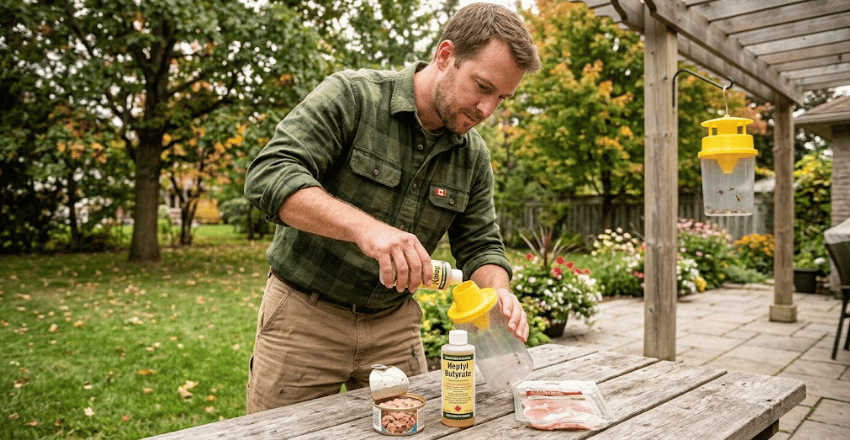
Bait choice affects what enters your container. Health Canada suggests using protein foods instead of sweets to reduce the chance of catching bees. Small amounts of pet food or other protein can work.
Sweet drinks can attract yellowjackets, especially when they are already scavenging around outdoor meals. They can also attract other insects. That makes them a less selective choice around pollinator-rich gardens.
Commercial lures offer more predictable instructions. Some products now registered in Canada use heptyl butyrate to attract yellowjackets. Use only the amount and setup described on the Canadian label.
Never assume stronger bait creates better control. A highly attractive mixture placed beside your deck can pull activity towards people. Good placement matters more than creating the strongest possible smell.
Where Should You Put the Trap?
Place traps away from tables, barbecue areas, doors, pools, and children’s play zones. Health Canada specifically warns against locating baited traps near human activity. A quiet property edge is usually a better place to start.
Think about the route insects already follow. Garbage areas, fallen fruit, and exposed food may be drawing them across the property. Put the trap away from people while intercepting that general movement.
Do not hang one beside an active nest entrance. Disturbing nest traffic can trigger defensive behaviour. Nests in a wall, ground opening, shed, or soffit need separate attention.
Decks are common trouble spots because food and drinks often stay outside. Keeping surfaces tidy also reduces unwanted attractants. Homeowners planning improvements can also review Homecraftly’s deck railing ideas for safer outdoor layouts.
Timing Matters During the Canadian Season
Activity changes from spring through late summer. Early colonies are smaller, while later colonies may contain far more workers. Food preferences and scavenging behaviour can also change during the season.
Check your property in early summer for developing nests. Health Canada recommends early inspection because a new nest is easier to address than a mature colony. Do not approach a nest closely simply to confirm its size.
Late summer often brings more encounters around food and garbage. Keep bins closed and outdoor meals covered. These basic steps reduce the food sources that compete with your trap.
Maintenance: Keep the Trap Working
Inspect the container regularly from a safe distance. Replace bait when it dries out, becomes spoiled, or stops attracting insects. Follow the replacement schedule for any commercial lure.
Service the trap when activity around it is low. Wear closed shoes and avoid handling containers with live insects. Follow manufacturer instructions for emptying commercial products.
Store unused materials out of reach of children and pets. A tidy garage makes seasonal equipment easier to manage. Homecraftly’s garage organization guide offers a useful approach for separating seasonal supplies.
Clean reusable equipment before storing it for winter. Label commercial lure refills so they are not confused with household products. Dispose of single-use traps according to their packaging instructions.
Common Reasons Traps Do Not Work
Poor placement is one of the most common problems. A trap beside your dining table may increase activity where you want less. Move it farther from people before changing everything else.
The wrong attractant can also reduce catches. Different species respond differently to scents and foods. A product labelled for yellowjackets may not control every insect people casually call a wasp.
Stale bait creates another problem. Food can dry, rot, or lose its scent. Refresh it rather than leaving the same mixture outside for weeks.
Finally, a nearby colony may simply be too large for trapping to make a noticeable difference. Catching workers does not automatically remove the nest. In that case, find the real source instead.
Trapping Versus Nest Control
Trapping and nest treatment solve different problems. A trap targets insects that leave the colony to search for food. Nest management targets the colony itself.
Health Canada recommends professional help when active nest removal presents a risk. Large groups can attack when you disturb their nest. Hidden wall or ground nests can be especially difficult to handle safely.
If you use a pesticide in Canada, read the entire label first. Health Canada advises checking for a Pest Control Products number. The label identifies the approved pest, location, precautions, and application method.
Leave harmless nests alone when they pose no meaningful risk. Wasps also prey on other insects and have ecological value. Focus control on situations where human activity and defensive insects overlap.
Reduce Wasps Before You Need More Traps
Start by removing easy food sources. Keep garbage lids closed, cover outdoor drinks, and bring pet food indoors. Pick up fallen fruit before it begins fermenting.
Check sheds, eaves, railings, and other sheltered areas early in the warm season. Small developing nests deserve caution, but early awareness helps you plan. Avoid blocking an active entrance without professional advice.
Keep outdoor work areas clean and uncluttered. That makes insect movement easier to notice. It also reduces hidden spots around stored materials and garbage.
For broader seasonal maintenance ideas, Homecraftly’s concrete sealer guide can help protect patios and exterior slabs. Combining basic maintenance with food control makes the outdoor space less attractive.
Frequently Asked Questions
Where should I put a wasp trap?
Place it away from patios, play equipment, doors, and outdoor dining spaces. Bait can increase insect activity around the container. A quieter edge of the property is usually safer.
Do homemade traps work?
They can reduce local foraging activity when the bait and placement suit the insects present. Results vary because species and food preferences differ. They should not be treated as a complete solution for an established colony.
What bait attracts yellowjackets?
Protein bait can attract scavenging yellowjackets and may reduce bee bycatch compared with sweet bait. Commercial lures can also target specific yellowjacket species. Always follow the label when using a packaged attractant.
How often should I change the bait?
Check it frequently during active periods. Replace food when it dries out, spoils, or stops working. Follow the commercial product’s stated refill schedule.
Will a trap remove a nest?
No reliable trap can guarantee removal of an established colony. It mainly catches insects leaving the nest to forage. Persistent heavy activity may require professional nest assessment.
Are commercial yellowjacket lures approved in Canada?
Some products containing heptyl butyrate received Canadian registration in December 2025. Registered products must be used according to their labels. Check current packaging for the appropriate PCP information.
Make Your Outdoor Space Less Attractive to Wasps
Start with food control before adding more equipment. Cover drinks, close garbage bins, clean spills, and move bait away from people. Those simple changes can reduce daily encounters around a Canadian yard.
Use trapping as one part of the plan. Match the design to the nuisance insect and check it regularly. Treat an active nest as a separate safety issue rather than expecting traps to solve it.
For more Canadian DIY, maintenance, and outdoor home projects, visit Homecraftly’s Home Improvement section. Good home maintenance prevents problems before they get bigger. It also helps you enjoy your outdoor space with fewer unwanted surprises.