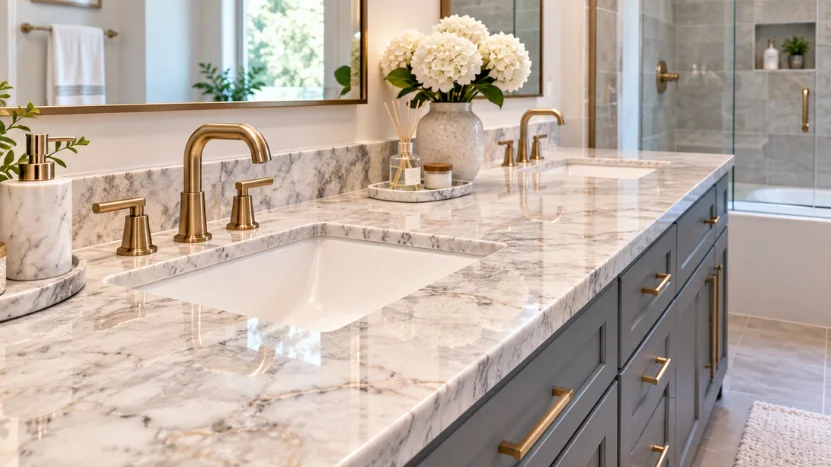
Choosing bathroom countertops means balancing moisture resistance, maintenance, appearance, and budget. Bathrooms expose surfaces to splashes, cosmetics, cleaners, humidity, and hot styling tools. The right material should handle those conditions without demanding constant care. Also worth reading: Mosquito Trap Guide for Canada.
For most Canadian homes, quartz offers a strong balance of durability and easy maintenance. Laminate works well when keeping costs low matters most. Granite, marble, porcelain, and solid surface suit homeowners with different design and maintenance priorities.
Quick answer: Quartz is a practical bathroom surface because it is non-porous and requires no routine sealing. Laminate offers the lowest upfront cost, while granite provides natural variation. Marble delivers distinctive character but needs greater care. Your best choice depends on moisture exposure, budget, maintenance preferences, and design goals.
Bathroom Countertop Materials at a Glance
| Material | Moisture resistance | Maintenance | Approximate Canadian cost | Good choice for |
|---|---|---|---|---|
| Quartz | Excellent | Low | $50–$180/sq. ft. | Busy family bathrooms |
| Granite | Good when sealed | Medium | $50–$190/sq. ft. | Natural-stone designs |
| Marble | Moderate | High | $45–$250/sq. ft. | Feature bathrooms |
| Solid surface | Excellent | Low | Mid-range | Smooth joins |
| Laminate | Fair at seams | Low | $6–$30/sq. ft. | Budget renovations |
| Porcelain | Excellent | Low | Mid-to-high | Modern bathrooms |
Canadian prices vary considerably by region, supplier, slab grade, fabrication, and installation requirements. Sink cutouts and special edges can increase the final quote. Always compare installed prices rather than material prices alone.
Key Takeaways
* Prioritize moisture resistance around sinks and backsplashes. * Quartz suits homeowners wanting minimal routine maintenance. * Laminate can reduce costs but requires careful protection around seams. * Natural stone provides unique patterns but usually requires more upkeep. * Small vanity tops can make premium materials more affordable. * Remnant stone may reduce material costs for smaller bathrooms. * Compare complete installed quotes before choosing a surface.
What Makes a Good Bathroom Countertop?
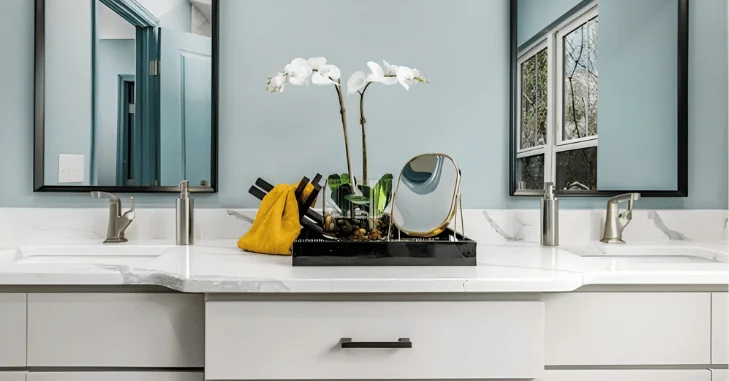
Bathroom surfaces face different stresses than kitchen worktops. Heat from cookware is irrelevant, but standing water becomes a bigger concern. Toothpaste, cosmetics, hair dye, soap, and cleaning products also create regular staining risks.
A useful vanity material should resist moisture and clean without complicated routines. It should also tolerate normal bathroom products without losing its finish. For family bathrooms, those practical qualities often matter more than dramatic veining.
Design still deserves attention because the vanity creates a strong visual anchor. Its colour should work with cabinets, flooring, fixtures, and wall finishes. HomeCraftly’s interior painting guide can help you choose wall colours that suit the vanity.
1. Quartz: A Low-Maintenance Choice
Engineered quartz combines mineral material with resin and pigments. Its non-porous surface does not require the routine sealing associated with many natural stones. That feature makes it particularly useful around frequently used sinks.
Quartz also comes in many colours and stone-inspired patterns. Homeowners can achieve a marble-like appearance without marble’s same maintenance requirements. Consistent patterns can also simplify matching surfaces across double vanities.
Heat remains one consideration despite quartz’s durability. Resin within the material can be damaged by excessive temperatures. Use a protective mat beneath hot hair tools rather than placing them directly on the surface.
2. Granite: Natural Character and Strong Durability
Granite gives every vanity natural colour and pattern variation. It resists scratching well and handles heat better than many engineered materials. Those characteristics make it attractive for homeowners who prefer genuine stone.
The trade-off is maintenance because natural stone can absorb liquids. Proper sealing helps protect granite from staining and moisture. The required schedule depends on the particular stone and sealer.
Look at the actual slab before approving a purchase whenever possible. Small samples cannot show every vein or colour change. Natural variation is part of granite’s appeal, but buyers should know what they will receive.
3. Marble: Beautiful but More Demanding
Marble can create an elegant vanity with distinctive natural veining. It works especially well in bathrooms where appearance takes priority over easy upkeep. Each slab also has variations that manufactured materials cannot duplicate.
The material requires more attention than quartz. Marble can stain, scratch, and develop etched areas after contact with certain products. Regular sealing helps, but it does not make the stone maintenance-free.
Think about your household before choosing it. A carefully maintained ensuite presents fewer challenges than a busy children’s bathroom. Homeowners comfortable with natural ageing may find those changes acceptable.
4. Solid Surface: Practical and Repairable
Solid-surface materials use acrylic or similar resins with mineral fillers. Fabricators can create smooth joins and integrated sink designs. The result can be especially useful where easy cleaning is a priority.
These surfaces are non-porous and require no stone sealing. Minor scratches can often be sanded or refinished rather than requiring complete replacement. That repairability separates solid surface from several competing choices.
Scratch resistance is lower than quartz or granite. High heat can also damage some products. Homeowners should follow the manufacturer’s care instructions for their selected brand.
5. Laminate: The Budget-Friendly Option
Modern laminate offers far more patterns than older builder-grade products. Stone, concrete, and wood effects can create an attractive vanity without natural-stone pricing. Canadian renovation estimates place laminate among the least expensive surface options.
The vulnerable areas are usually seams and exposed edges. Water entering damaged joints can reach the underlying substrate and cause swelling. Careful installation around the sink therefore matters greatly.
Laminate makes particular sense for powder rooms, rentals, and lower-cost renovations. It can also free budget for better fixtures or cabinetry. HomeCraftly’s broader home-improvement section offers useful planning ideas for balancing renovation priorities.
6. Porcelain: Thin, Durable and Modern
Porcelain offers strong resistance to moisture, stains, and heat. It is available in patterns that imitate marble and other natural materials. This combination suits contemporary bathrooms requiring a clean appearance.
Large-format porcelain can create fewer visible joints across a vanity. Its relatively thin profile also supports streamlined modern designs. Fabrication quality matters because exposed edges can chip during handling or installation.
Ask potential installers about their experience with porcelain slabs. The material requires suitable tools and careful fabrication. An experienced fabricator can explain available edge treatments before measurements are finalized.
How Much Do Bathroom Countertops Cost in Canada?
Canadian countertop pricing varies widely because material is only one part of the final invoice. Fabrication, sink openings, faucet holes, edge treatments, delivery, removal, and installation can affect your total. Regional labour costs create further differences.
Current Canadian renovation estimates place laminate around $6–$30 per square foot. Quartz commonly falls around $50–$150, while granite can range around $50–$190. Marble ranges more widely, with reported prices reaching about $250 per square foot.
Bathroom projects have one useful advantage: vanities require less material than kitchens. Some fabricators sell remnants left from larger slab projects. A suitable remnant can make quartz or natural stone more affordable for a small vanity.
How to Choose Bathroom Countertops for Your Home
Start with the bathroom’s actual use instead of choosing by appearance alone. A primary family bathroom needs durability and easy cleaning. A lightly used powder room gives you greater freedom to prioritize style.
Next, decide how much maintenance you will realistically accept. Choose quartz or solid surface if regular sealing sounds inconvenient. Consider granite or marble if natural variation matters enough to justify additional care.
Finally, compare complete quotes using the same specifications. Confirm material, thickness, edge profile, sink cutouts, removal, delivery, and installation. HomeCraftly’s renovation section can help you place the surface decision within a larger remodel.
Sink Type and Installation Matter Too
The surface cannot be selected separately from the sink. Undermount models create an uninterrupted top edge and make wiping water easier. Vessel sinks create a different focal point but require careful faucet and drain planning.
Confirm all openings before fabrication begins. Faucet spacing, sink dimensions, and drain positioning should match the selected vanity. HomeCraftly’s guide to P-trap plumbing explains the drainage components found beneath bathroom sinks.
Professional fabrication makes sense for heavy stone and engineered slabs. Prefabricated laminate or vanity tops may be easier for experienced DIYers. Plumbing changes can still require professional help depending on the project.
Colours and Finishes That Work in Canadian Bathrooms
Light surfaces can make compact bathrooms feel more open. Soft white, warm grey, beige, and restrained stone patterns work with many cabinet colours. They also adapt easily when paint or accessories change later.
Dark surfaces create stronger contrast with pale cabinetry. They can look striking in larger bathrooms with good lighting. Water spots may appear more noticeable on certain dark or glossy finishes.
Consider the room as one composition rather than matching every finish exactly. Coordinate undertones between the vanity, flooring, walls, and metal fixtures. A small material sample viewed under bathroom lighting can prevent expensive colour surprises.
Frequently Asked Questions About Bathroom Countertops
What is the best material for bathroom countertops?
There is no single material for every household. Quartz offers a practical combination of moisture resistance, durability, and low maintenance. Granite, laminate, porcelain, marble, and solid surface address different budgets and design priorities.
Is quartz or granite better for a bathroom?
Quartz requires less routine maintenance because it does not need sealing. Granite provides natural variation and strong heat resistance but may require periodic sealing. Your preference for maintenance and natural stone should guide the choice.
What is the cheapest bathroom counter material?
Laminate is usually among the lowest-cost options available in Canada. Current renovation estimates place it well below most stone products. Careful sealing around sinks and seams helps protect the substrate from water.
Can I use kitchen countertop materials in a bathroom?
Many kitchen materials also work well around a vanity. Bathrooms place greater emphasis on moisture resistance and cosmetic stains than cookware heat. Always confirm that the specific product is approved for the intended indoor application.
Do bathroom counters need a backsplash?
A backsplash protects the wall behind the sink from repeated splashes. It also creates a finished transition between the vanity and wall. Options include matching slab material, tile, a peel-and-stick backsplash, or another water-resistant wall finish.
Choose for Daily Life, Not the Showroom
A beautiful sample tells you little about everyday maintenance. Think about water, cleaning habits, cosmetics, children, hot tools, and your renovation budget. Those factors will narrow the choices faster than colour alone.
Quartz suits many busy households because upkeep is simple. Laminate keeps initial spending down, while natural stone offers distinctive character. Solid surface and porcelain fill useful spaces between those priorities.
Before ordering, collect at least two detailed installed quotes. Ask about remnants if your vanity is small. Then choose the surface that fits both your bathroom and the way your household uses it.