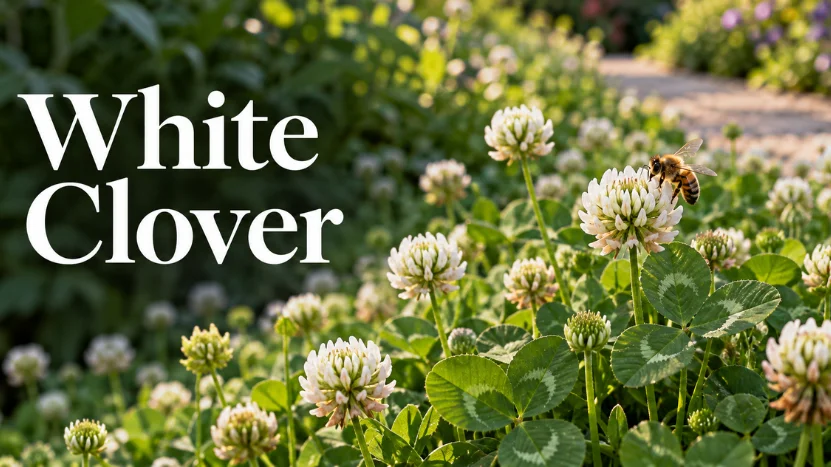
White clover can create a greener, softer, and less fertilizer-dependent lawn for many Canadian homeowners. The perennial grows low, spreads through creeping stems, and fixes nitrogen through its root system. It works best when mixed with suitable turf grasses rather than planted as a monoculture.
Canadian conditions still matter when deciding whether to plant it. Winters, summer drought, lawn traffic, soil drainage, and local expectations can affect the result. A mixed lawn usually offers better year-round coverage than a yard covered entirely in clover. There is more on this in our guide on backyard landscaping ideas.
Clover can suit Canadian lawns because it stays low, fixes nitrogen, fills thin areas, and supports pollinators. It usually works best mixed with turf grass. Plant in cool, moist weather, keep seeds damp during establishment, and avoid broadleaf herbicides that can also kill clover.
Quick Facts for Canadian Homeowners
| Factor | What to Know |
|---|---|
| Botanical name | Trifolium repens |
| Plant type | Low-growing perennial legume |
| Best lawn use | Mixed with cool-season turf grass |
| Growth habit | Creeping stems that root at nodes |
| Flowers | White, sometimes tinged pink |
| Main benefit | Fixes atmospheric nitrogen |
| Main drawback | Flowers attract pollinators and may not suit every yard. |
| Seeding season | Spring or early fall, depending on local frost timing |
| Mowing | Less demanding than many conventional turf lawns |
| Herbicide concern | Many broadleaf lawn herbicides can damage or kill clover. |
The Canadian Food Inspection Agency describes Trifolium repens as a perennial with short stems and creeping growth. Its leaves normally have three leaflets, often carrying a pale V-shaped marking. The plant can vary considerably in size because the species is highly variable.
Key Takeaways
- A grass-and-clover mixture often provides better resilience than clover alone.
- Clover can reduce the lawn’s dependence on added nitrogen fertilizer.
- Established plants spread horizontally and can fill weak areas.
- Flowering lawns attract bees and other visiting insects.
- Broadleaf weed killers generally conflict with maintaining clover.
- Spring and early fall are practical seeding periods in much of Canada.
- Lawn use, shade, drainage, and regional climate should guide your decision.
Is White Clover a Good Choice for a Canadian Lawn?
For many properties, the answer is yes, especially when homeowners want fewer fertilizer inputs. University of Saskatchewan gardening guidance recommends adding about 5% clover seed to a lawn mix. The university also notes its nitrogen-fixing ability and usefulness for filling bare areas.
A mixed lawn can also handle appearance changes better through Canada’s seasons. Turf grass helps cover areas where clover thins during colder periods or stressful weather. Clover can then occupy gaps where ordinary turf struggles to remain dense.
Pure clover lawns need more consideration before planting. Once established, the plant can spread strongly and may enter nearby beds or lawn areas. A grass mixture usually gives homeowners more control while keeping many clover benefits.
Benefits of Adding Clover to Your Lawn
One major advantage is reduced reliance on nitrogen fertilizer. Clover works with bacteria around its roots to convert atmospheric nitrogen into usable forms. That relationship can support plant growth without the same fertilizer schedule required by demanding turf.
Its creeping growth can also help cover thin sections of a yard. Stems called stolons travel across the soil surface and produce new roots. This growth habit helps the plant recover and occupy open spaces.
Clover flowers also provide nectar for visiting insects. This can make the lawn more useful for pollinators during flowering periods. Homeowners seeking a highly uniform turf appearance may see those same flowers differently.
Water use can also be lower under suitable conditions. The City of Kamloops lists reduced watering as an advantage of clover-based lawns in its semi-arid climate. Results will still depend on soil, rainfall, mowing, and plant establishment.
Drawbacks You Should Consider First
Flowers can attract bees throughout parts of the growing season. That is valuable for pollinators but may concern households that frequently go barefoot on the lawn. Regular mowing can reduce flowering, although it also reduces available nectar.
Clover is also incompatible with many standard broadleaf lawn herbicides. Products designed to remove broadleaf weeds often treat clover as a target plant. Weed management may therefore require hand pulling, spot treatment, or different lawn-care methods.
Wear tolerance also depends on how the lawn is used. A mixed surface generally handles family use better because turf grasses provide additional structure. Constant sports traffic may still favor a conventional turf blend designed for heavy wear.
Winter appearance is another consideration in colder regions. Clover may thin or become dormant while temperatures remain low. Keeping grass in the mixture can provide more consistent seasonal coverage.
Clover Lawn Versus Traditional Grass
| Feature | Clover-Grass Mix | Conventional Turf Lawn |
|---|---|---|
| Nitrogen needs | Usually lower | Often higher |
| Flowers | Yes. | Usually none |
| Pollinator value | Higher | Lower |
| Broadleaf herbicide use | Limited | More options |
| Appearance | Natural and varied | More uniform |
| Bare-spot filling | Creeping clover helps. | Depends on grass type |
| Heavy traffic | Moderate | Depends on turf variety |
| Seasonal consistency | Better when mixed with grass | Often more uniform |
Neither option is automatically better for every Canadian property. Your preferred look and how you use the lawn should guide the decision. Soil conditions and maintenance expectations matter as much as plant choice. A mixed surface is often the practical middle ground.
It keeps the familiar structure of turf while adding clover’s nitrogen-fixing qualities. It also reduces the visual problems that can occur when one plant temporarily struggles.
When to Plant Clover in Canada
Cool, moist conditions usually make establishment easiest. Spring works once the hard frost risk has eased, and the soil can be prepared. Early fall can also work when seedlings have enough time to establish before persistent freezing weather.
Canada’s planting window varies widely between regions. A yard in Vancouver does not share the same frost calendar as Winnipeg or Edmonton. Use local frost dates rather than following one national planting date.
Late planting carries more risk in colder areas. Young seedlings need moisture and enough growing time to develop roots. If winter arrives quickly, spring seeding may be the safer choice.
How to Plant Clover in an Existing Lawn
Assess the existing yard conditions before spreading seed. Remove heavy debris and mow the lawn so seeds can reach the soil. Light raking can expose soil where dense thatch blocks seed contact.
For seasonal cleanup before seeding, HomeCraftly’s lawn sweeper guide explains options for collecting dry leaves and loose clippings. Removing thick debris helps tiny seeds reach the surface. Avoid aggressive disturbance when the existing turf is otherwise healthy.
Follow these basic planting steps:
- Mow the lawn shorter than its normal maintenance height.
- Rake thin areas so some bare soil becomes visible.
- Correct serious drainage or compaction problems before seeding.
- Spread seed evenly across the prepared area.
- Press or rake lightly to improve seed-to-soil contact.
- Water gently to keep the surface consistently moist.
- Reduce heavy foot traffic while seedlings establish.
Keep tiny clover seeds near the soil surface. Deep burial can reduce successful emergence. Gentle watering is also safer than a strong stream that moves seed into piles. Keep the seedbed moist during germination and early growth. Don’t let new seedlings repeatedly dry out. Once established, reduce watering gradually and encourage deeper rooting.
Mowing and Caring for an Established Clover Lawn
Mowing height should support both plants in a mixed lawn. Cutting too closely during hot weather can stress grass and expose soil. Mowing higher helps retain moisture and maintain a fuller surface. HomeCraftly’s self-propelled lawn mower guide can help homeowners compare equipment for larger yards.
The right machine matters less than sharp blades and a consistent mowing height. Avoid removing too much growth in a single mowing session. Leaving some clippings can return nutrients to the lawn. University of Saskatchewan guidance recommends mowing at 8 centimeters or higher. It also advises removing no more than one-third of grass height during mowing.
Heavy nitrogen applications can favor grasses and change the balance of a mixed lawn. Clover already gains nitrogen through its root relationship with bacteria. Base fertilizer decisions should be based on soil conditions rather than an automatic schedule.
Soil, Sun, and Moisture Requirements
This plant tolerates several soil types, but it establishes best when soil conditions support healthy roots. Persistent standing water can harm both clover and companion turf. Extremely dry, sandy locations may also need more frequent watering.
White clover grows across varied soil conditions and pH ranges, according to guidance from the University of Massachusetts. It spreads by seeds and creeping stems that root at their nodes. Those traits explain why established patches can expand steadily across suitable lawn areas.
Sunlight also affects lawn density. Trees, buildings, and fences can create sections that receive different amounts of light. Watch those zones separately instead of expecting identical growth throughout the property.
If fencing changes shade or yard access, HomeCraftly’s Canadian fence guide covers planning considerations for Canadian properties. Consider the final shade pattern before reseeding beside a new fence. That small planning step can prevent disappointing coverage later.
What Happens During a Canadian Winter?
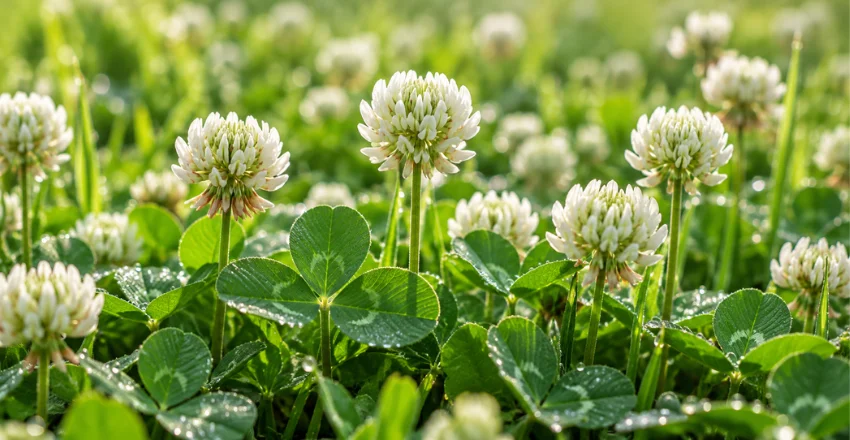
The plant is considered cold-hardy, but winter appearance still varies by region. Severe cold, ice, fluctuating temperatures, and snow cover can influence spring recovery. Grass in a mixed lawn helps maintain coverage when clover growth slows.
After snow disappears, spring may initially reveal uneven patches. Give the lawn time to resume active growth before assuming plants have died. Thin sections can be overseeded once suitable spring conditions return. Don’t judge the lawn by winter dormancy alone.
A successful Canadian yard changes appearance throughout the year. The better measure is whether it recovers reliably during the growing season.
Should You Choose Microclover Instead?
Microclover is a smaller-leaved selection of the same species used in many lawn mixtures. Its finer appearance can blend more discreetly with conventional turf. It may suit homeowners who want clover benefits without prominent foliage.
Standard Dutch clover is usually more noticeable when flowering. It can create a relaxed, natural lawn appearance that many homeowners prefer. Seed availability and cost may also vary by variety. Neither option eliminates maintenance completely. Both need proper establishment, moisture, and sensible mowing. Choose based on appearance, traffic, local availability, and your willingness to reseed thin areas.
Frequently Asked Questions
Does white clover survive Canadian winters?
It can survive winter across many Canadian regions, but conditions vary greatly. Established plants generally handle cold better than newly germinated seedlings. Mixed turf also helps keep the lawn covered during winter dormancy and spring recovery.
Does a clover lawn need fertilizer?
Clover can fix atmospheric nitrogen through bacteria associated with its roots. That can lower the need for added nitrogen in a mixed lawn. Soil testing remains useful when other nutrients or pH problems are suspected.
Will clover take over my entire lawn?
It can spread through creeping stems when conditions favour its growth. Mowing, grass competition, soil fertility, and lawn traffic all influence the final balance. A mixed lawn often changes naturally from season to season.
Does clover attract bees?
Yes, flowering clover can attract bees and other nectar-seeking insects. Frequent mowing can reduce the number of flowers present. Families concerned about stings should consider how they use the lawn before planting large areas.
Can I use weed killer on a clover lawn?
Many broadleaf herbicides can injure or kill clover along with unwanted weeds. Always read the Canadian product label before applying any pesticide. Hand removal and better turf density may be preferable for scattered weeds.
Is a grass-and-clover lawn better than pure clover?
For many Canadian homes, a mixture is the safer choice. Grass provides structure and seasonal coverage while clover fills gaps and contributes nitrogen. The combination also tolerates changing conditions better than relying on one plant alone.
A Practical Choice for the Right Canadian Yard
Clover can be a useful lawn partner when you want less fertilizer use and a less formal look. It performs best when soil contact, watering, mowing, and timing support good establishment. Mixing it with suitable turf grass can also improve durability and year-round coverage.
Start with a small section if you are uncertain about the look. Observe flowering, traffic tolerance, mowing needs, and winter recovery before expanding it. That test gives you information based on your property rather than another homeowner’s climate.
For many Canadian yards, the best approach isn’t replacing every blade of grass. It is creating a balanced lawn that suits your climate and maintenance preferences. That balance can make routine yard care simpler without sacrificing useful green space.