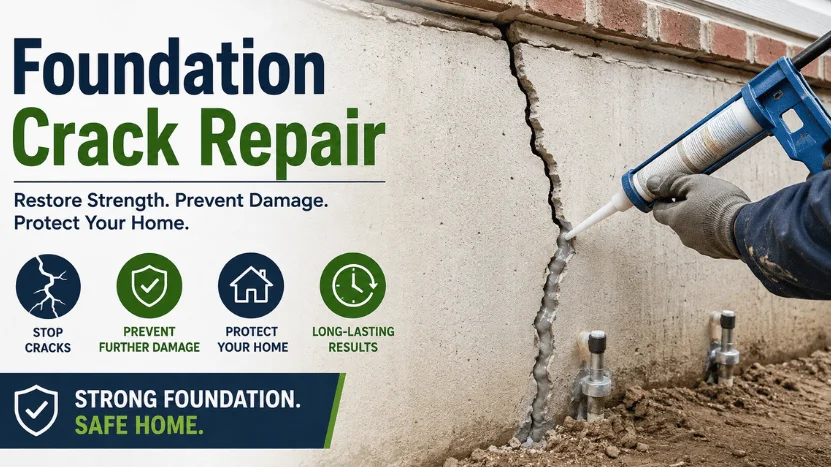
A crack in a basement wall does not automatically mean your house has a serious structural problem. The right foundation crack repair depends on the crack’s direction, movement, moisture, foundation material, and underlying cause. Canadian homeowners also need to account for rain, snowmelt, freezing soil, and seasonal moisture changes.
The safest approach is to diagnose the crack before sealing it. Narrow, stable vertical cracks in poured concrete often need a different treatment from horizontal cracks, stair-step cracking, or walls that are bowing. If the crack is growing, leaking heavily, or paired with visible movement, get a professional assessment before attempting a cosmetic fix.
Quick Facts for Canadian Homeowners
| What you see | Common concern | Typical next step |
| Narrow vertical crack in poured concrete | Shrinkage or minor movement | Monitor; seal if water enters. |
| Vertical crack that leaks | Water pathway through the wall | Polyurethane injection is commonly considered |
| Dry, stable crack needing rigid bonding | Structural continuity may matter. | Epoxy injection may be appropriate after assessment. |
| Horizontal crack | Lateral soil or water pressure | Professional structural assessment |
| Stair-step crack in block or masonry | Differential movement or settlement | Professional assessment and monitoring |
| Crack with wall displacement or bowing | Possible structural movement | Structural engineer or qualified foundation specialist |
| Repeated leakage after repair | A drainage or waterproofing problem may remain. | Investigate exterior water management. |
Quick answer: Repair starts by identifying whether the crack is stable, leaking, or linked to structural movement. Stable poured-concrete cracks may be sealed with polyurethane or epoxy. Horizontal cracks, stair-step cracks, widening gaps, displacement, or bowing walls should be assessed before anyone chooses a repair material.
Key Takeaways
- Crack direction gives useful clues, but it should not be your only diagnostic test.
- Polyurethane is commonly used to seal leaking cracks because it remains flexible.
- Epoxy creates a rigid bond and can suit stable cracks where structural bonding matters.
- Horizontal or actively moving cracks need diagnosis before sealing.
- Canadian interior injection commonly costs about CA$500 to CA$1,500 per crack.
- Exterior excavation and waterproofing can cost roughly CA$3,000 to CA$5,500 per crack.
- Fixing drainage around the house can reduce the chance of recurring water problems.
- Photograph and measure questionable cracks so you can tell whether they are changing.
How to Tell Whether a Foundation Crack Is Serious
Start with the crack’s shape, then look for movement around it. Vertical cracks are common in poured-concrete basement walls and can form as concrete cures or the house undergoes minor settlement. A narrow vertical line that stays unchanged is generally less concerning than a horizontal crack accompanied by inward wall movement.
Do not judge severity from width alone. Check whether one side of the crack sits forward from the other, whether doors have started binding, and whether the gap has changed over time. Water stains, fresh efflorescence, dampness, or recurring leakage also tell you that the opening is affecting more than appearance.
Horizontal cracking deserves faster attention because soil pressure can push a basement wall inward. Stair-step patterns in concrete block or masonry can also point to uneven settlement between sections of the building. If either pattern appears with bowing, displacement, or continuing movement, arrange an assessment rather than covering the crack with patching compound.
A simple monitoring record can make that assessment more useful. Photograph the crack from the same position, add the date, and measure several consistent points along it. Homecraftly’s measuring tape guide can help if you need a reliable metric measurement for your notes.
Foundation Crack Repair Methods: Which One Fits the Problem?
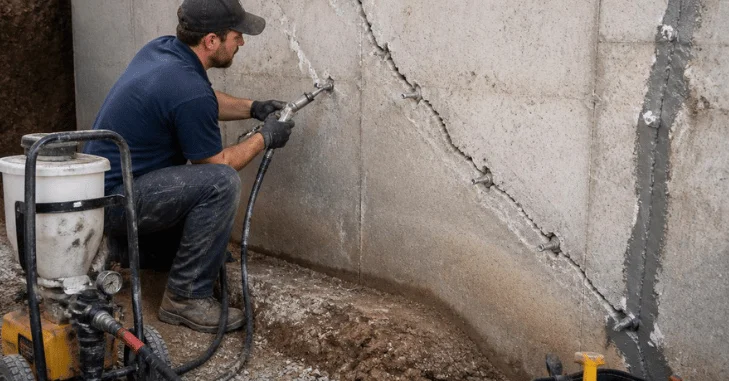
No single material fixes every basement-wall crack. A repair that stops a leak may not correct foundation movement, while structural reinforcement does not automatically solve poor exterior drainage. Diagnosis should therefore come before choosing polyurethane, epoxy, excavation, or reinforcement.
Polyurethane Injection
Polyurethane injection is commonly used for water-bearing cracks in poured-concrete walls. The material can expand within the opening and create a flexible seal through irregular spaces. That flexibility can be useful where minor seasonal movement is expected, but injection does not stabilize a wall that is actively bowing.
Epoxy Injection
Epoxy cures into a rigid material and bonds the sides of a stable concrete crack. It may suit situations where restoring continuity across a dry crack matters more than accommodating movement. A professional should first determine whether the crack has stopped moving, because a rigid repair cannot correct ongoing settlement.
Exterior Excavation and Waterproofing
Exterior work addresses the water before it passes through the foundation wall. A contractor may excavate beside the affected area, expose the crack, repair it, and apply a waterproofing membrane or drainage system. This method costs more because digging, access, backfilling, and restoring landscaping add substantial labor.
Structural Reinforcement and Stabilization
A horizontal crack or visibly displaced wall can require reinforcement instead of simple injection. Depending on the diagnosis, work may involve engineered reinforcement, wall anchors, carbon-fiber systems, piers, or underpinning. The correct system depends on why the wall moved, so structural work should be designed around the cause rather than the appearance alone.
Can You Repair a Foundation Crack Yourself?
Canada’s federal flood-preparedness guidance recommends inspecting foundations inside and outside and monitoring cracks for moisture or growth. It lists materials such as hydraulic cement, epoxy filler, polyurethane injection, and waterproofing products for appropriate maintenance work. The same guidance advises consulting a professional before repairs when the cause or severity is uncertain.
DIY work makes the most sense when you have a small, stable, accessible crack with no displacement or signs of structural movement. Clean the area carefully, follow the chosen product’s preparation requirements, and keep a record of what the crack looked like before treatment. Do not treat a surface patch as proof that the underlying cause has disappeared.
Leave horizontal cracks, bowing walls, significant displacement, recurring movement, and unexplained settlement to qualified professionals. The same applies when water continues entering after previous sealing attempts. In those cases, paying for diagnosis first can prevent spending money on a repair that treats only the visible symptom.
How Much Does Foundation Crack Repair Cost in Canada?
Canadian pricing varies sharply with the repair method, access, region, foundation type, and severity. RenoQuotes reports about CA$500 to CA$1,500 for interior polyurethane or epoxy injection, while exterior work may run around CA$3,000 to CA$5,500 per crack. HomeStars also places basic injection work near the lower end of the market, with complex repairs costing thousands more.
| Repair type | Approximate 2026 Canadian range | Main cost drivers |
| Interior epoxy or polyurethane injection | CA$500 to CA$1,500 per crack | Access, crack condition, local labor |
| Exterior excavation and waterproofing | CA$3,000 to CA$5,500 per crack | Digging depth, access, landscaping |
| Localized structural work | Often several thousand dollars and up | Damage, reinforcement method, engineering |
| Major stabilization or underpinning | Can reach tens of thousands | Settlement, scope, engineering, excavation |
Treat those numbers as budgeting ranges rather than quotes. A short, accessible crack in an unfinished basement costs less to reach than a buried exterior wall beneath a deck or driveway. Get written estimates that identify both the proposed repair and the cause the contractor believes it will correct.
Stop Water From Creating the Same Problem Again
Sealing a crack is only one part of keeping a basement dry. Rainwater and snowmelt should move away from the house rather than collecting beside the foundation. Canada’s foundation-maintenance guidance specifically connects cracks with groundwater, precipitation, snowmelt, and moisture entry.
Begin at the roofline and follow the water to its discharge point. Keep eavestroughs clear and confirm that downspouts release water onto ground that slopes away from the building. Homecraftly has detailed guides to Canadian eavestrough maintenance and choosing a downspout extension for Canadian conditions.
Also inspect grading, window wells, exterior sealants, and basement drainage after heavy rain or spring melt. Concrete around the property may need appropriate moisture protection, although a surface sealer cannot correct structural movement or failed drainage. Homecraftly’s concrete sealer guide explains how common products behave under Canadian salt and freeze-thaw exposure.
When to Call a Contractor or Structural Engineer
Call a qualified foundation contractor when a stable-looking crack is leaking, needs injection, or requires exterior waterproofing work. Ask what caused the opening, why the recommended material suits it, and what the warranty covers. A useful quote should explain the repair system instead of naming a product without a diagnosis.
Move to a structural engineer when the wall is bowing, cracks show displacement, settlement appears active, or horizontal cracking suggests significant lateral pressure. An engineer can assess the structure without tying the diagnosis to one contractor’s repair system. That independent assessment can be valuable before you approve expensive stabilization work.
Do not wait for another winter if the crack is changing quickly or water enters during every major storm or thaw. Government guidance recommends monitoring repaired cracks during heavy rainfall, ice, and snowmelt, and checking the foundation at least annually. Keeping photos, dates, and repair records also gives future contractors or buyers a clearer history.
Your Next Step
Start by photographing the crack, measuring it, and checking the same wall from both inside and outside. Then look at drainage around the house and note whether the crack changes after rain, spring melt, or dry weather. Those observations give a contractor or engineer better information than a single photograph taken on inspection day.
If the crack is leaking but stable, obtain two or three written quotes that identify the material, preparation, warranty, and water-management work included. If you see horizontal cracking, wall movement, displacement, or continuing settlement, arrange a structural assessment first. Repair the cause and the opening together, rather than paying twice for a seal that cannot address the underlying problem.
Frequently Asked Questions
Yes, many stable cracks in poured-concrete basement walls can be accessed and injected from the interior. Interior work avoids excavation and is often less expensive when the crack is easy to reach. Exterior repair may make more sense when drainage, waterproofing membranes, or recurring water pressure must also be addressed.
Polyurethane is commonly selected for active water leakage because it can form a flexible seal within the crack. Epoxy is rigid and is more often considered when bonding stable concrete across the opening is a priority. The better choice depends on moisture, movement, wall construction, and the purpose of the repair.
A straightforward interior injection may be completed during one contractor visit, although preparation and curing times vary by product. Exterior excavation takes longer because crews must dig, repair, waterproof, backfill, and restore the work area. Structural stabilization can take longer still because engineering and larger construction work may be required.
A horizontal crack deserves professional attention, especially if the wall bows inward or either side has shifted. This pattern can indicate lateral pressure from soil, water, or frost acting against the wall. Sealing the visible line does not remove that pressure, so diagnosis should come before cosmetic repair.
Coverage depends on your policy and on what caused the damage. Insurance may treat sudden insured events differently from settlement, maintenance problems, groundwater, or gradual deterioration. Contact your insurer before major work if you think a covered event contributed to the damage, and document the condition with dated photographs.