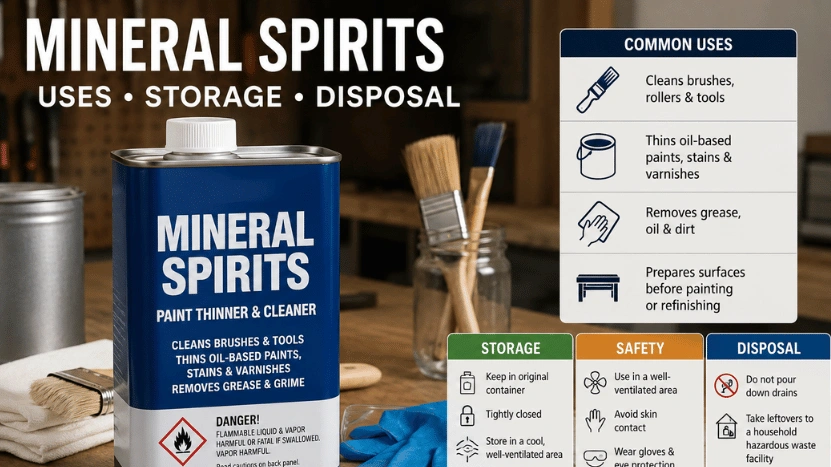
Mineral spirits are petroleum-based solvents used to thin some oil-based finishes and remove oily residue. They are not a general household cleaner. Read the exact product label, use only the amount needed, keep the container closed, and take leftovers to your local household hazardous waste program.
Decide before opening a solvent container.
| Job | First choice | Why |
| Routine dust or tracked dirt | Water-based cleaner | It avoids adding solvent to a simple cleaning job. |
| Oil-based paintbrush cleanup | Product-directed solvent | Check the coating label before choosing a thinner. |
| Greasy metal part before repair | Small solvent wipe | Use a clean cloth and keep the waste separate. |
| Unknown finish or coated floor | Hidden-area test | Some finishes can soften or dull unexpectedly. |
TL;DR: Mineral spirits can be useful for compatible oil-based finishing tasks. Treat the label as the source for product-specific instructions. Do not pour leftovers into drains. Keep liquid, solids, used cloths, and empty packaging separate until a local hazardous-waste service tells you how to hand them over.
What mineral spirits solvent is used for
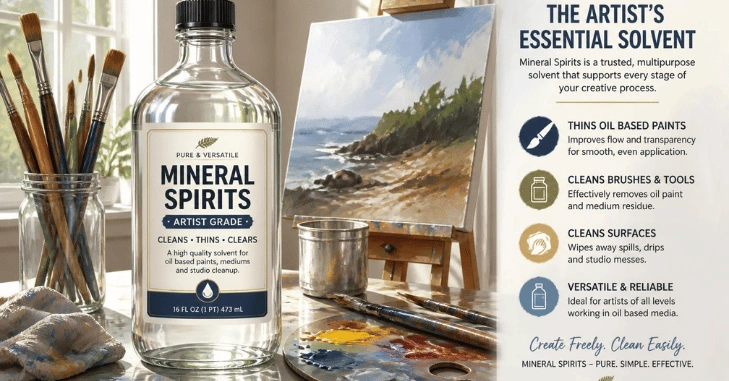
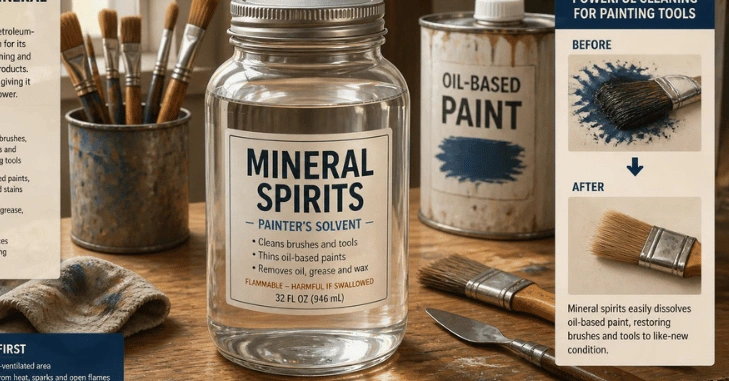
This product label commonly describes a petroleum distillate solvent blend. In home projects, it may be used to clean compatible brushes, thin a compatible coating, or remove greasy residue before a repair.
The right use depends on the finish and the label. One solvent that works with an oil-based coating may not suit another product. Do not assume that a clear liquid is safe for every painted, varnished, or plastic surface.
For ordinary upkeep, a solvent is usually more than the job requires. Start with the least aggressive method. Our hardwood floor cleaning methods explain water-based approaches for routine floor care.
Other Names for Mineral Spirits and What the Liquid Actually Is
Mineral spirits is a clear, petroleum-based solvent made from a blend of hydrocarbons that boil off between roughly 140 °C and 200 °C. It does not mix with water, and it is a different product from true turpentine, which is distilled from pine resin. Depending on the shop, the country or the label, the same family of solvents is sold under several names:
- White spirit: the usual name in the UK, Ireland and Australia.
- Mineral turpentine or turpentine substitute: common in Australia, New Zealand and on some imported cans.
- Petroleum spirits: a general label you will see on safety data sheets.
- Stoddard solvent: a North American industrial grade first developed in the 1920s as a less flammable dry-cleaning solvent.
Regular, odourless and substitute products
Regular mineral spirits has a noticeable petroleum smell. Odourless mineral spirits is refined further to strip out most of the aromatic compounds, so it gives off fewer fumes and is the version most artists use for oil painting. Canadian hardware stores also stock mineral spirits substitutes and low-odour cleaners, including plant- and water-based formulas. These can clean brushes well but often behave differently when thinning a finish, so read the can before swapping one for another.
Turpentine, the pine-based option, still works as a solvent, but its strong smell and harsher fumes are the main reason most homeowners now reach for mineral spirits instead.
The Product and Paint Thinner Are Not Always Interchangeable
Paint thinner is a broad retail term. It can describe different solvent blends. This is a more specific product category, but formulas still vary by brand and intended use.
Mineral spirits match the product to the coating manufacturer’s directions. If a label calls for a particular reducer or cleaner, follow that direction rather than substituting based on appearance or smell. An odorless version may smell less noticeable, yet it still requires the same label-first approach.
Do a small compatibility test to protect the project. Put a tiny amount on a hidden spot with a clean cloth. Stop if the finish softens, becomes sticky, or changes sheen.
Everyday Uses Beyond Paint Cleanup
Because it dissolves oil, grease and wax without leaving water behind, a small amount of mineral spirits handles plenty of jobs around the house, garage and workshop:
- Degreasing metal parts: wipe or soak small engine parts, bike chains and hand tools, scrub with a stiff brush, dry them fully, then relubricate with fresh oil.
- Removing sticker and tape residue: a dampened cloth lifts gummy label adhesive from glass, porcelain and glazed ceramics. Wash the item in warm, soapy water afterwards.
- Lifting scuff marks: dab black heel marks on vinyl, tile or sealed wood, then wipe the spot with a damp cloth and a drop of dish soap. Test a hidden area first.
- Cleaning sap from garden tools: pruners, loppers and pruning saws come clean with a soaked rag. Dry the blades before you store them.
- Woodworking prep: wiping a sanded board picks up fine dust and previews roughly how a clear finish will look. Unlike water, mineral spirits does not raise the grain, and it evaporates within minutes.
- Refreshing dull furniture: on intact clear finishes such as varnish, polyurethane, lacquer or shellac, a light wipe removes built-up wax and grime. Skip painted, cracked or damaged surfaces.
Keep mineral spirits for oil-based paints, stains and varnishes. Added to latex or other water-based paint, it will not blend and can make the paint separate or curdle.
Use the Smallest Workable Amount
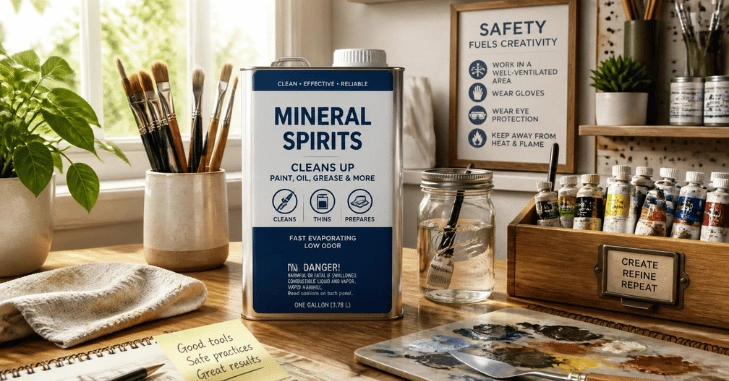
Pouring from a large can over the work invites spills and contamination. Instead, place only the amount needed in a clean, compatible work container. Close the original container promptly.
- Read the product label and safety data sheet before the task.
- Remove ignition sources and keep the work area clear.
- Use the product only where the label says ventilation is adequate.
- Wet the cloth lightly instead of soaking it.
- Keep a separate clean container for unused product.
- Stop if you cannot follow the label’s handling instructions.
Do not return used liquid to the original can. Dirt, paint, and moisture can spoil the remaining product. That separate, clearly marked container prevents one small cleanup job from contaminating the full supply.
Can The Solvent Be used indoors?
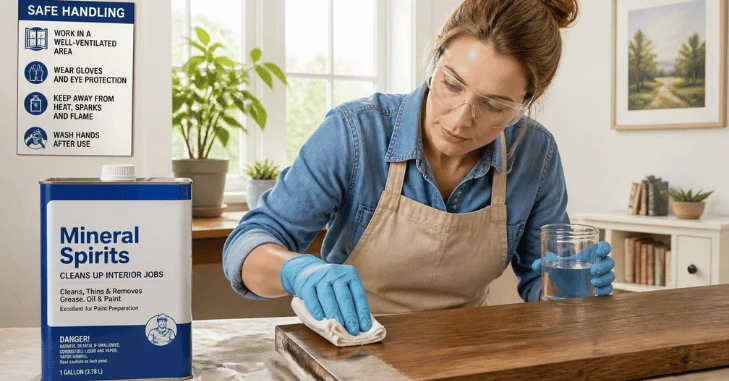
Whether a product can be used indoors depends on its label, the task, and the available ventilation. Small rooms, basements, and enclosed workshops may not provide suitable conditions. If you cannot meet the label requirements, postpone the job or choose a water-based method.
Keep the container closed except while dispensing. Avoid open flames, sparks, hot tools, and heaters. Do not eat, drink, or store food beside the work area. Keep children and pets out of the space until the task and cleanup are complete.
The Quebec government’s CNESST database classifies one petroleum-solvent product as a flammable liquid and vapor, and it lists an aspiration hazard. That is why the exact product label deserves more weight than a shortcut from another project.
A Four-Container Cleanup Workflow
This separation routine makes disposal clearer. Use four labelled containers or groups, and keep them apart from the start.
| Group | What belongs there | What to do next |
| Clean product | Unused liquid | Seal in the original container. |
| Used liquid | Cloudy solvent from cleanup | Seal and ask the local program about drop-off. |
| Solids and clothes | Paint residue, wipes, and applicators | Keep separately and follow the product label. |
| Empty packaging | Container and cap | Follow municipal instructions for that packaging. |
This workflow also protects your finished work. A cloth that has touched a dark stain can transfer color to a pale project. A reused container can carry grit that scratches a fresh surface.
If you are preparing a metal repair, work on one small area at a time. Follow with the repair method, not another broad solvent wash. Our guide to removing rust from metal can help you choose the next step for the corrosion itself.
Health and Fire Safety Basics
Mineral spirits is flammable, and its vapours can build up quickly in a closed room. Breathing too much can cause headaches, dizziness, nausea and eye or throat irritation, while repeated skin contact dries the skin and can lead to dermatitis. Swallowing it is especially dangerous because the liquid can be drawn into the lungs, so do not induce vomiting; call your provincial poison centre or 911 right away.
- Wear nitrile or other chemical-resistant gloves and safety glasses.
- Open windows and run a fan that pushes air outdoors. Step out for fresh air if you notice the smell building.
- Keep the can away from pilot lights, furnaces, sparks and cigarettes. Low-flash grades can ignite at normal room temperature, and regular grades at roughly 30 to 55 °C.
- Lay used rags flat outdoors to dry, or seal them in a metal can with water, especially when they also hold oil-based stain or finish, which can heat up on its own.
- Never pour leftovers down a sink, toilet or storm drain.
Storage That Keeps the Product Identifiable
Keep the solvent in its original labeled container with the cap secured. Store it where the label permits, away from heat and ignition sources. Never use a drink bottle or an unmarked jar for a solvent. Label any temporary used-liquid container with the product name and the words “used solvent.” Add the date.
A clear label helps a household hazardous waste attendant identify what you brought in. Store only the amount you expect to use. A half-full, unknown container becomes hard to manage after a renovation. Buying the smallest practical size reduces leftover waste.
How to Dispose of Leftover Solvent in Canada
Disposal rules vary by location, so check with your municipality or regional household hazardous waste service before you travel. Keep the original label, or write down the product name, then transport the sealed container upright as directed by the program.
According to a 2017 Government of Canada environmental procedures specification, volatile materials, including petroleum solvents, must not enter waterways, storm sewers, or sanitary sewers. Do not pour leftover liquid into a sink, toilet, floor drain, ditch, or storm inlet.
Do not guess about used cloths or empty containers. Local programs can have different instructions for liquids, paint-covered materials, and packaging. Ask before putting any of them in household garbage or recycling.
Choose a Gentler First Step for Wood Repairs
Solvent is not a cure for every mark. For a water ring, start by identifying the finish and the cause. A lower-impact approach may solve the issue without stripping the surrounding surface.
Our article on assessing water rings on wood can help you make that call. For a dent or gap, clean and dry the surface before using a compatible repair product. This wood filler guide explains how surface preparation affects the durability of a repair.
Conclusion
Mineral spirits can make certain home-improvement and workshop jobs easier when used correctly. The key is to use only the amount needed, test the product on an inconspicuous area, maintain the ventilation required by the label, and keep the solvent away from heat, sparks, flames, children, and pets.
Storage and disposal are equally important. Keep unused mineral spirits in their original labeled container with the cap securely closed. Used solvent, contaminated cloths, paint residue, and empty containers should be kept separate until you know how your local household hazardous-waste program wants them handled. Our related guide, Muriatic Acid Safety, goes further into this.
Most importantly, never pour mineral spirits down a sink, toilet, floor drain, storm drain, or sewer. Canadian disposal requirements can vary by municipality, so check with the appropriate local service before transporting or discarding leftover solvent.
Frequently Asked Questions
This solvent is used with some oil-based coatings for cleanup, thinning, and removal of oily residue. Check the exact coating and solvent labels before using them together.
Not always. Paint thinner is a broad term, whereas mineral spirits refers to a specific solvent category. Product formulas and approved uses can still differ.
Use it indoors only if the product label permits the task and the space meets its ventilation directions. If those conditions are unavailable, choose another method or delay the work.
Store the product in its original, labelled container with the cap closed. Keep used liquid in a separate, labelled, compatible container until it reaches an approved program.
Contact your local household hazardous waste service for its current instructions. Take sealed, labelled material there as directed, rather than pouring it into a drain or sewer.
Keep cloths, paint residue, unused product, and used liquid separate. Follow the product label and local hazardous waste instructions for each group.
Yes. They are the same type of petroleum solvent. Mineral spirits is the North American name, while white spirit is used in the UK, Ireland and Australia. Odour level and grade vary by brand, so compare labels when following instructions written for another country.
No. Mineral spirits only works with oil-based paints, stains and varnishes. Thin latex and other water-based paints with water, and clean those brushes with warm, soapy water.
No. It contains no water, so it does not swell wood fibres. That is why woodworkers wipe it on after sanding to remove dust and preview the finish colour.